The 7 Best Chameleon Alternatives for Startups in 2026

Chameleon is often chosen because it can handle almost anything. Complex targeting, custom UI patterns, and now AI-assisted setup all make it a powerful onboarding platform. Over time, though, many teams realize they don’t need that much power.
Most onboarding ends up following a few repeatable patterns: simple tours, feature callouts, and occasional in-app messages. When the tooling is built for edge cases, everyday updates can feel slower and more involved than they need to be.
That gap becomes more noticeable as products evolve. Interfaces change often. Features ship incrementally. Onboarding needs to stay aligned, or it quickly becomes outdated. When updating onboarding requires more effort than updating the product itself, teams start to question the setup.
This is usually when alternatives come into the picture. Not because Chameleon lacks features, but because teams want something lighter, faster to change, and easier to maintain.
In this article, we break down 7 Chameleon alternatives and explain when they’re a better fit, depending on how your team builds and ships today.
What's Wrong With Chameleon?
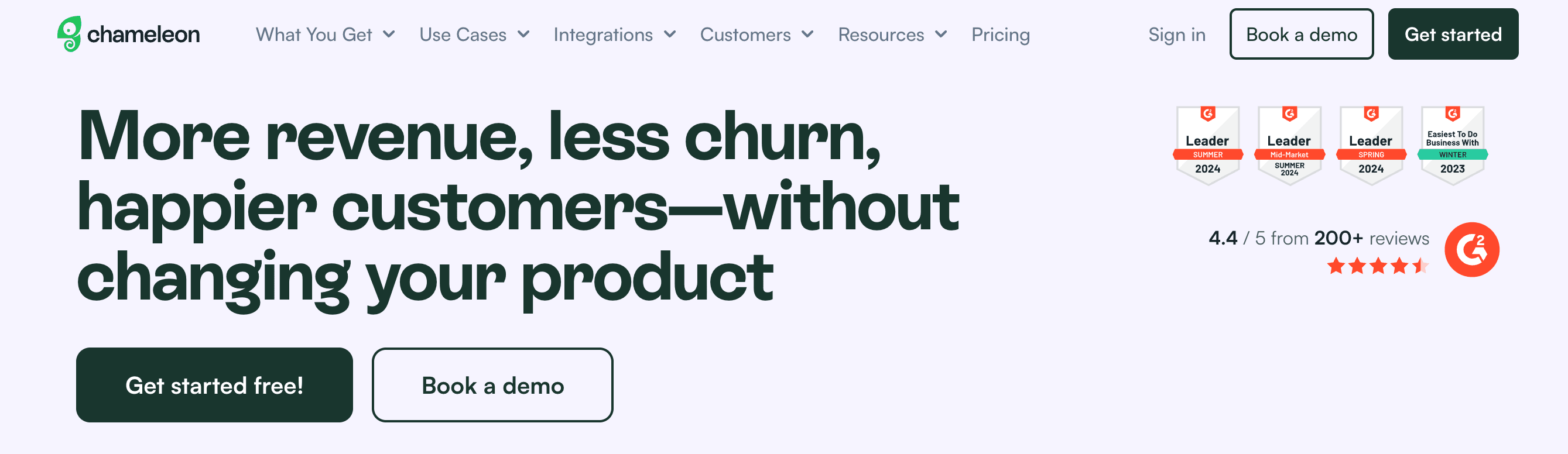
Chameleon is a solid onboarding tool. It’s powerful, flexible, and in recent years it’s added genuinely impressive AI features to help teams generate copy, suggest flows, and speed up setup. On paper, it checks a lot of boxes. And yet there are a few reasons why teams eventually steer away from it.
This isn't to say Chameleon isn't great. It is. Plus, it's AI-assisted builder is truly powerful. But there are a few complaints as evidence from G2 reviews.
First, complexity starts to outweigh the payoff. Chameleon is built for highly customized onboarding, which sounds great early on. But as products mature, many teams realize they’re maintaining a system that’s far more intricate than what their actual onboarding needs. The result is time spent managing configurations instead of improving user experience. It truly requires a lot of focus and a little persistence to get your tours functioning.
Second, speed becomes an issue. Modern product teams ship constantly. When onboarding changes lag behind product changes (even slightly) friction creeps in. Despite Chameleon’s capabilities, teams often find that iterating quickly still requires more effort than expected, especially when multiple stakeholders are involved.
Third, pricing and overhead become harder to justify. As usage grows, costs rise, while the marginal value of advanced features plateaus. Teams start asking a simple question: are we paying for flexibility we rarely use? In many cases, the answer is yes.
The landscape has also simply shifted. Newer onboarding tools now cover most real-world use cases with faster setup, cleaner defaults, and less cognitive load. When teams realize they can capture 80-90% of the impact with a simpler tool, and keep onboarding tightly aligned with product development, the decision to reevaluate becomes almost inevitable.
7 Alternatives to Chameleon for Startups
1. Hopscotch
Hopscotch is built around a simple idea: onboarding should be quick to create, easy to update, and feel like a natural part of your product.
It has 4.9 stars on G2, compared with Chameleon's 4.4.
Instead of endless settings and complex logic, Hopscotch focuses on what teams actually use day to day. You can build product tours, tooltips, modals, and in-app guidance without much setup, and make changes without worrying about breaking things. Segmentation is strong enough to show the right messages to the right users, without turning onboarding into a separate project.
Teams switch to Hopscotch because they want less friction. Onboarding becomes something you improve little by little, instead of something you avoid touching. For startups that want clean, professional onboarding without enterprise pricing or complexity, Hopscotch is often the best and easiest next step.

2. Userflow
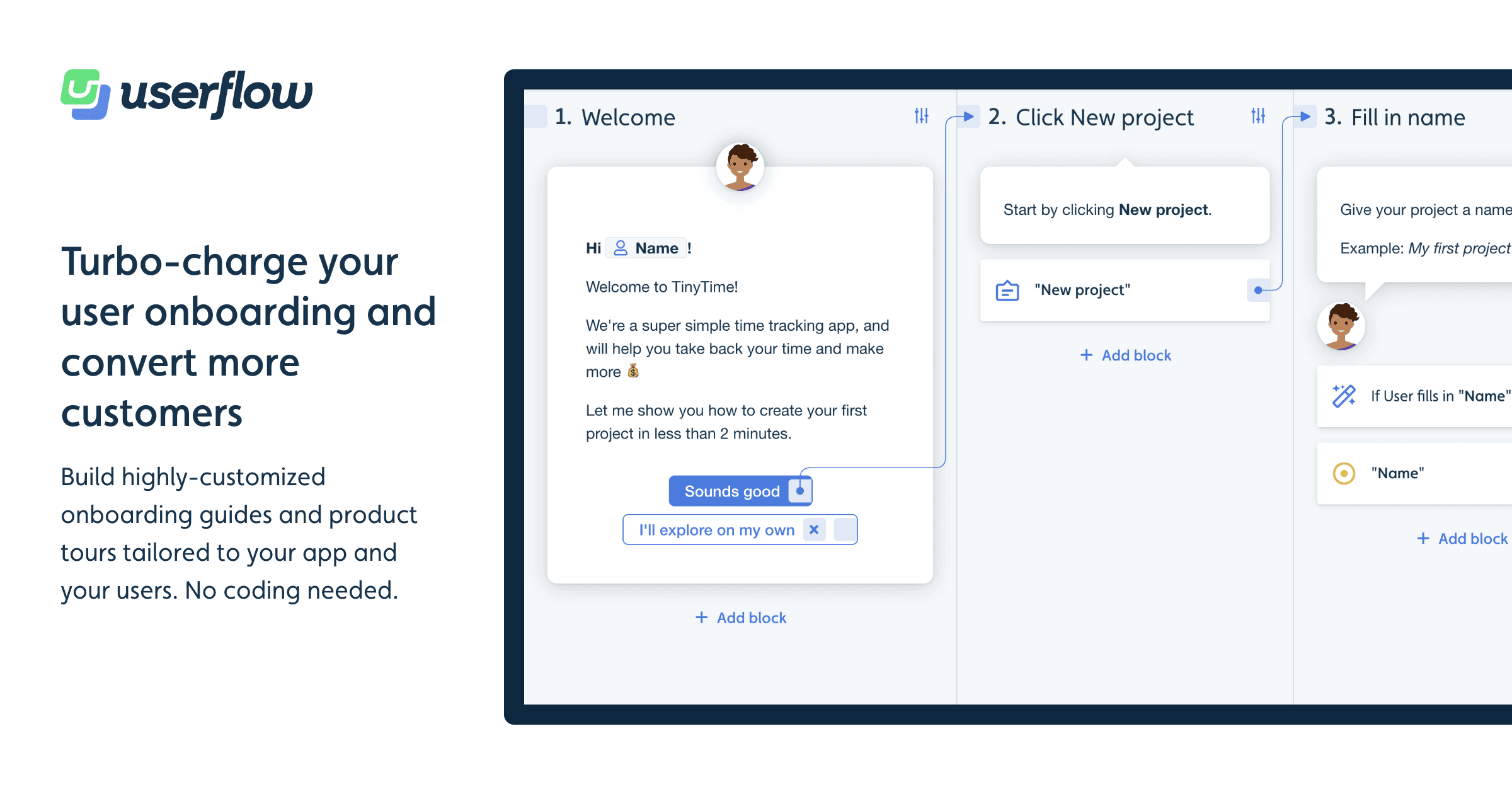
Userflow is built for teams that want maximum control over onboarding logic.
Its main strength is branching. You can build complex, conditional flows that adapt based on user behavior, attributes, and past actions. For products with many paths, roles, or configurations, that flexibility can be essential. Userflow also supports a wide range of UI patterns, making it suitable for teams that need more than simple tours and tooltips.
Since being acquired by Beamer, product development has slowed, and Userflow hasn’t changed as much as the market around it. It’s still a capable and reliable tool, but it comes with a high price tag and a level of complexity that many teams no longer fully use.
📚 Also read: Userflow Pros, Cons and Alternatives
3. Userpilot
Userpilot looks at onboarding through a growth lens.
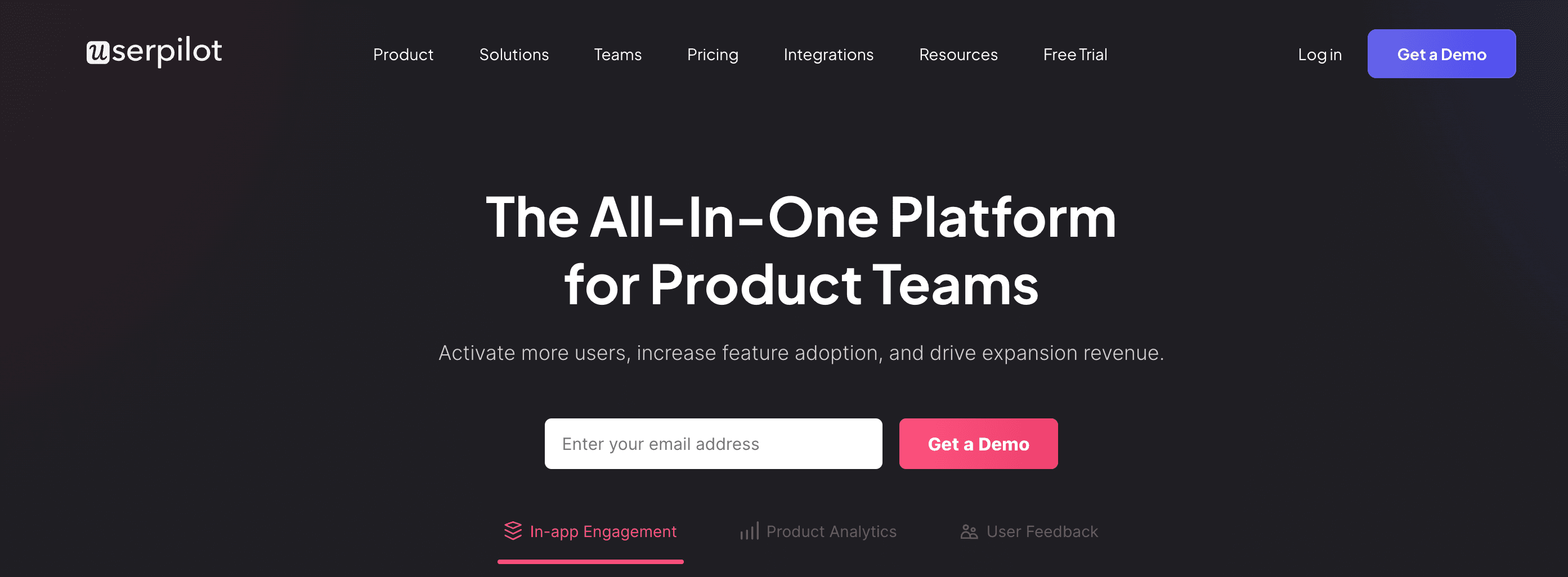
Instead of focusing first on how onboarding looks, Userpilot focuses on what users actually do. Onboarding flows are closely tied to event tracking, feature usage, and activation metrics, so you can see which steps help users move forward and which ones don’t.
Teams often switch from Chameleon to Userpilot because they want clearer answers to practical questions. Which onboarding flows increase activation, where users drop off, and what kind of guidance actually reduces churn.
Userpilot gives you less visual freedom than some design-heavy tools, but for teams that care most about measurable impact, that tradeoff usually makes sense.
4. Appcues
Appcues sits in a category of its own when mobile apps are involved.
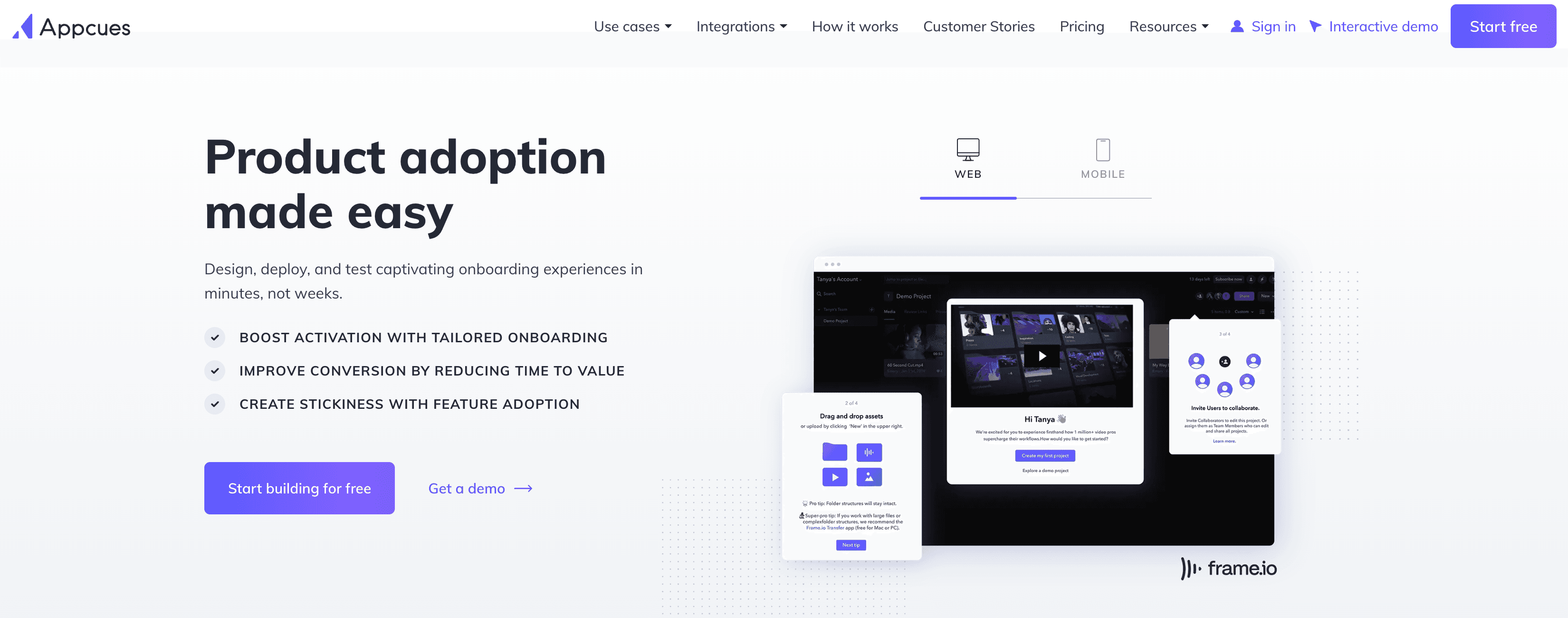
Appcues supports both web and native mobile experiences. That matters for products where users switch between platforms and expect onboarding to feel consistent everywhere. Appcues has been around a long time, and that shows in how stable and reliable its mobile support is compared to many newer tools.
It’s also one of the more expensive options on the market, which makes it harder to justify for web-only products. But if mobile onboarding plays a central role in your product experience, Appcues often earns its price by doing that one thing especially well.
📚 Also read: 11+ Proven SaaS Growth Hacks for Rapidly Scaling Your SaaS
📚 Also read: Ultimate Guide to Product-Led Growth with 9+ Examples
📚 Also read: Best Appcues Alternatives
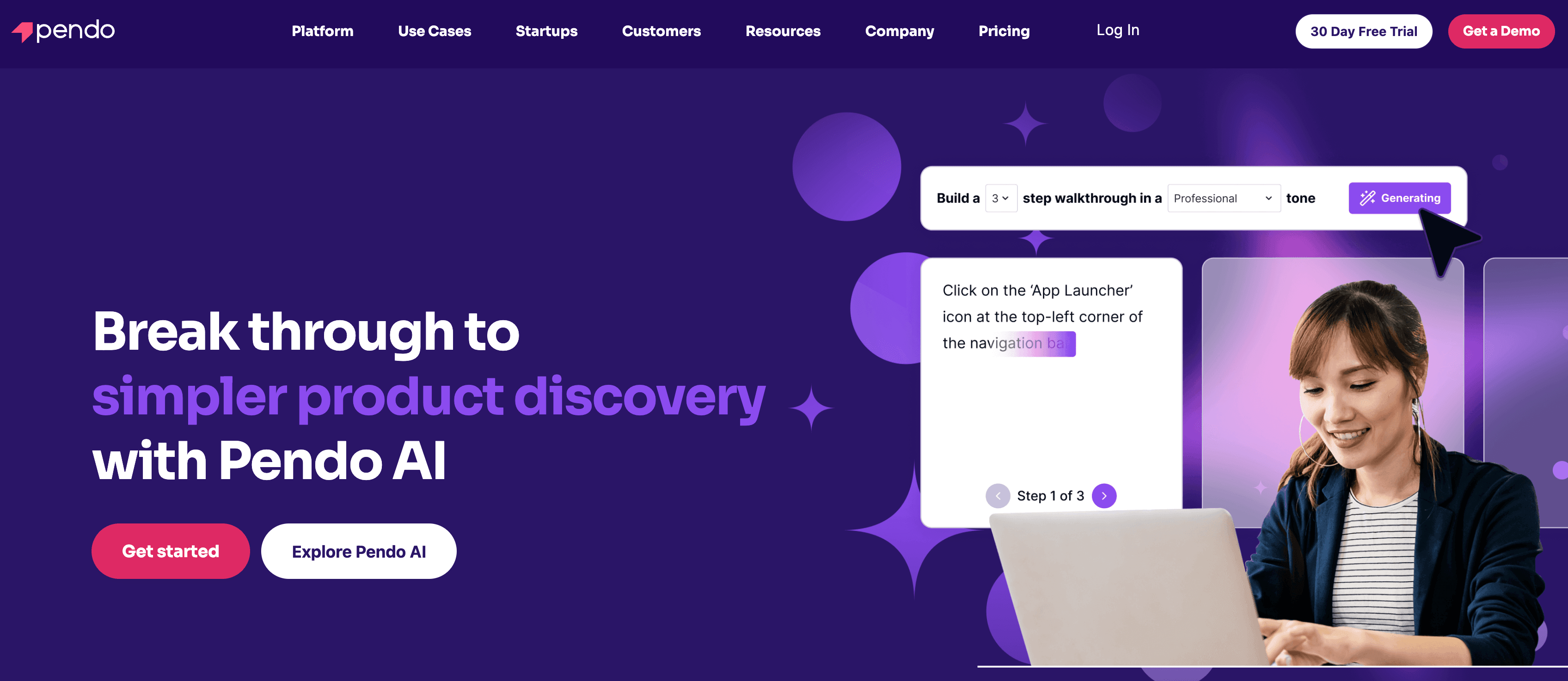
5. Pendo
Pendo is best thought of as an analytics platform first, and an onboarding tool second.
Pendo’s main strength is helping teams understand how users behave at scale. Its onboarding features sit on top of detailed usage data, cohort analysis, and feature-level insights. This allows teams to base onboarding decisions on real behavior instead of assumptions, and to adjust guidance as usage patterns change.
For smaller teams, that depth can feel like more than they need. But for organizations that already rely heavily on data and dashboards to guide product decisions, Pendo can fundamentally change how onboarding and product strategy work together.
6. Whatfix
Whatfix is built for environments where onboarding goes far beyond one SaaS app. It’s commonly used to guide employees, partners, or customers through multiple internal systems, legacy software, and complex workflows. Because of that wide scope, setup takes time and pricing usually starts in the 5-figure range.
What you get in return is consistency. Whatfix helps large organizations standardize how people use software, enforce best practices, and reduce the need for repeated training. It’s not meant for fast experiments or frequent UI tweaks, but for control and reliability at scale.
For startups, this level of depth is usually unnecessary. But for enterprises dealing with constant change across many tools, Whatfix can become a core piece of infrastructure rather than just an onboarding tool.
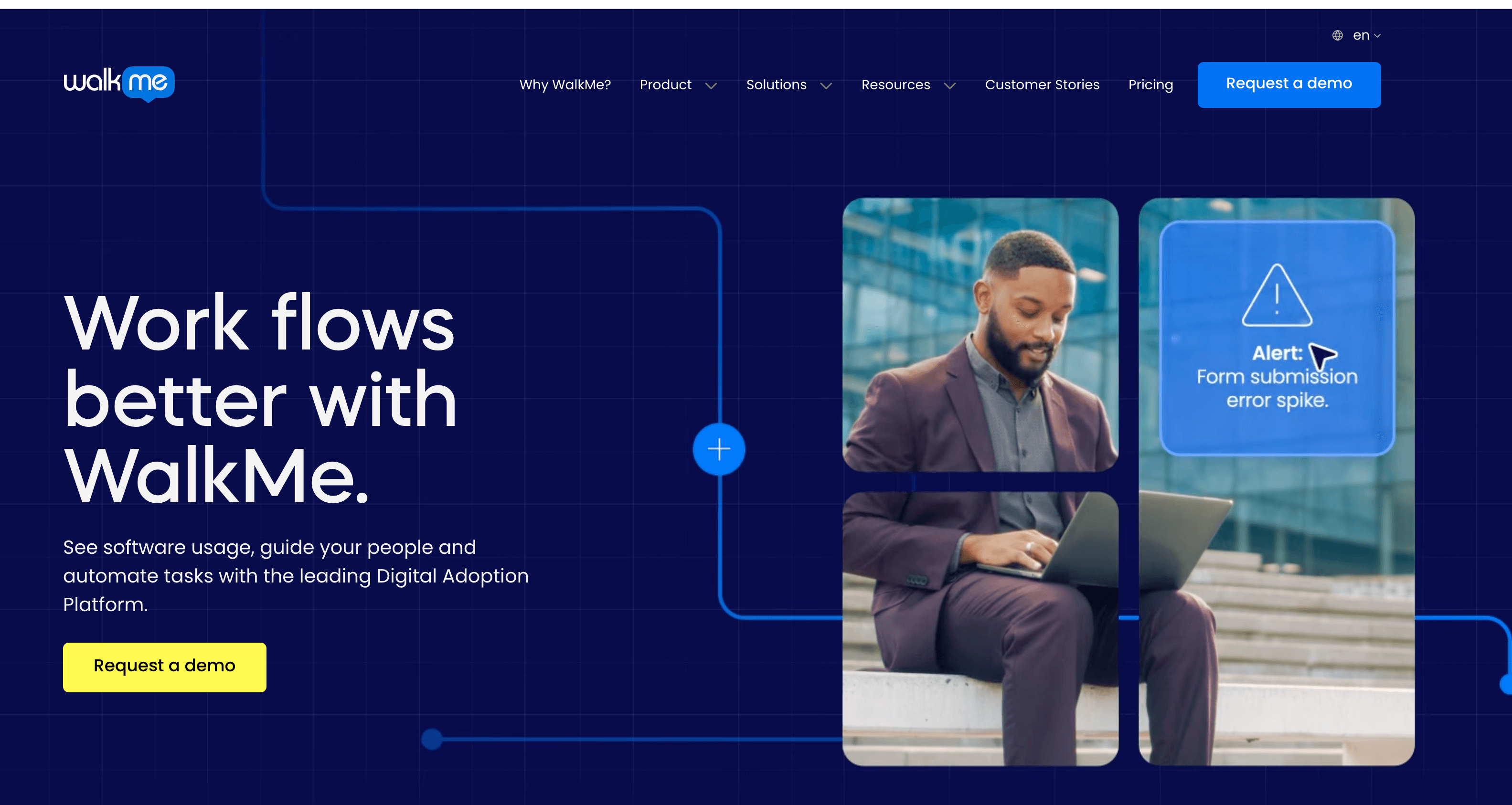
7. WalkMe
WalkMe approaches onboarding through the lens of change management.
WalkMe is commonly used in regulated or process-heavy environments where doing things the right way matters more than flexibility. It helps guide users through required workflows, supports large-scale software rollouts, and ensures people follow approved processes across the organization.
Compared to Whatfix, WalkMe is less focused on adding guidance across many tools and more focused on making sure users take the correct steps, in the correct order, every time. That makes it especially useful in industries like finance, healthcare, and large enterprise IT, where mistakes can be costly.
Like Whatfix, WalkMe is not really a good fit for early-stage companies. But for organizations where onboarding is closely tied to compliance and operational risk, it remains one of the most trusted options available.
How to Choose the Right Cameleon Alternative
Most onboarding tools cover the basics. Tours, tooltips, banners, and simple targeting are table stakes. What actually separates tools is how well they fit the constraints your team is working under.
Those constraints are usually very practical. How often your product changes. Who is responsible for updating onboarding. And how much time you can realistically spend keeping it up to date.
For most teams, speed is the limiting factor. Onboarding starts to fail when updates take too long or feel risky to make. Flows fall behind the product, teams avoid touching them, and onboarding quietly becomes outdated.
This is where Hopscotch tends to work best. It’s fast to set up, easy to change, and forgiving when your UI evolves. For teams shipping frequently, that ability to iterate quickly matters more than having every advanced feature available.
Other tools make sense when priorities are narrower. If onboarding needs to closely match a design system and visual control is non-negotiable, Chameleon might actually just be the tool for you, at the cost of more setup and ongoing maintenance. If onboarding is primarily used for analysis and experimentation, tools like Userpilot or Pendo are better aligned, since they emphasize data, segmentation, and outcomes.
But for most SaaS teams, especially startups and scale-ups that want onboarding they can actually maintain, Hopscotch is usually the most practical and sustainable option.
FAQ
What is the cheapest alternative to Chameleon product tours?
Coding your own onboarding is the only truly free option, but custom-built tours require ongoing developer maintenance and break easily across device sizes and product updates. The most affordable SaaS alternative is Hopscotch, starting at $99/month — well below Chameleon's $279/month entry plan. UserGuiding is another budget-friendly option at around $174/month. Both include the core features most teams need, though Hopscotch edges ahead on price, customer support, and design quality.
What is the easiest Chameleon alternative to set up?
Hopscotch and UserGuiding are consistently cited as the easiest Chameleon alternatives to get started with. Chameleon has a reputation for a steeper learning curve and often requires developer involvement for advanced setup. Hopscotch, by contrast, offers a Chrome Extension that lets you build and preview product tours directly in your app before installing any code. Most teams publish their first tour the same day they sign up.
What is the best Chameleon alternative for non-technical teams?
Hopscotch and UserGuiding are the two strongest options for non-technical teams. Chameleon's deep CSS customization and advanced configuration options, while powerful, can require technical knowledge to fully leverage. Both Hopscotch and UserGuiding use visual, no-code builders that let product managers and marketers create tours and tooltips by clicking on elements in their app — no developer involvement required.
What is the best Chameleon alternative for startups?
For early-stage and bootstrapped startups, Hopscotch is the most practical Chameleon alternative. Chameleon's Startup plan begins at $279/month, and costs scale significantly from there — with the average Chameleon customer reportedly spending over $30,000 per year. Hopscotch delivers the core features that matter most — product tours, tooltips, surveys, and segmentation — starting at $99/month with no feature gating.
What is the best Chameleon alternative for product tours specifically?
If product tours are your primary use case, Hopscotch is the strongest Chameleon alternative. Chameleon is a broad digital adoption platform with a wide feature set, which can introduce complexity and cost for teams that simply need great tours. Hopscotch is purpose-built for the tour and onboarding experience, delivering a faster builder, cleaner output, and a simpler pricing model without paying for features you don't need.
What is the best Chameleon alternative for onboarding emails?
If email is a core part of your onboarding strategy, Customer.io is the best Chameleon alternative to consider. Chameleon focuses on in-app experiences and has no native email capabilities, whereas Customer.io is purpose-built for behavioral email automation — letting you trigger onboarding sequences based on user actions and build multi-channel workflows across email, SMS, and push. Many teams pair Customer.io with a dedicated tour tool like Hopscotch to cover both channels.
What is the best Chameleon alternative for in-app analytics?
For teams that need deep product analytics, Pendo is the best Chameleon alternative. Where Chameleon offers engagement metrics tied to its tours and surveys, Pendo provides feature adoption tracking, funnel analysis, retention cohorts, and session replays. It's best suited to product and growth teams that need to understand how users interact with the product beyond tour completion. The tradeoff is price — Pendo sits firmly at the enterprise end of the market.
📚 Also Read:
Convert more trials with Hopscotch
Simple and delightful onboarding tours your users will love.