The 7 Best Userflow Alternatives for Startups in 2026

Most people leave SaaS tools because the product changes, not because they no longer need the tool. That’s what’s happening with Userflow in 2026. Userflow is still a capable, well-built onboarding tool. But since its acquisition by Beamer, product momentum has slowed while expectations around onboarding have increased.
Teams ship faster, products get more complex, and onboarding is no longer a “set it once” system. It’s something that needs to evolve continuously alongside the product. For many teams, that gap is what triggers the search for alternatives. In this article, we look at 7 tools that could be an alternative to Userflow in your business.
Why Teams Steer Away From Userflow
Userflow is a great tool. It has everything you need in an onboarding software. But there are a few reasons why other tools might be a better fit for startups.
First, pricing becomes harder to justify as onboarding matures. Early on, sophisticated branching logic and advanced flow control feel essential. Over time, teams realize that most users experience only a small subset of those flows, and they’re paying for power they don’t actively use.
Second, onboarding increasingly needs to move at the same pace as product development. When your product changes weekly, onboarding tooling that evolves slowly starts to feel restrictive, even if it’s technically “capable.”
And also, the market itself has changed. Newer tools now cover most real-world onboarding needs with less setup, better design defaults, and lower overhead. When teams realize they can get 80-90% of the value with far less friction, reevaluation becomes inevitable.

When Userflow Still Makes Sense
There are still scenarios where Userflow is a strong choice. If your onboarding relies heavily on conditional logic, deeply nested flows, or UI-state-specific triggers, Userflow remains one of the more capable tools on the market. For teams with complex products and the budget to support them, it can still be the right fit.
Where it becomes less compelling is when complexity exists more on paper than in practice. When teams maintain elaborate flows that few users actually see, or when onboarding needs to be adjusted frequently by non-technical teammates. That’s where alternatives start to look attractive.
1. Hopscotch
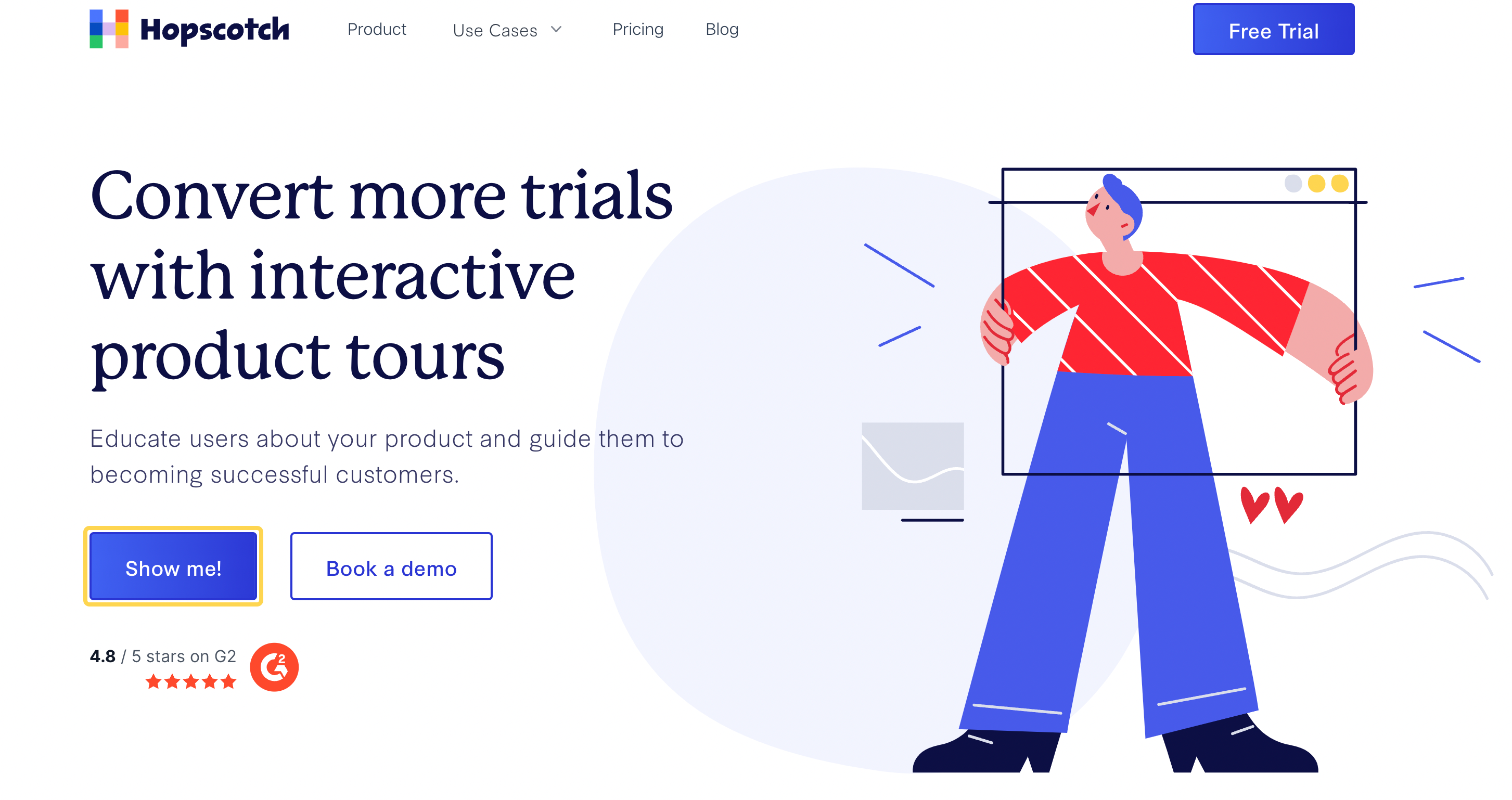
Hopscotch is built around a simple idea: onboarding should be quick to create, easy to update, and feel like a natural part of your product.
Instead of endless settings and complex logic, Hopscotch focuses on what teams actually use day to day. You can build product tours, tooltips, modals, and in-app guidance without much setup, and make changes without worrying about breaking things. Segmentation is strong enough to show the right messages to the right users, without turning onboarding into a separate project.
By 2026, Hopscotch also includes surveys and a built-in resource center, closing one of the few gaps it previously had compared to Userflow.
Teams switch to Hopscotch not because they need fewer features, but because they want less friction. Onboarding becomes something you improve little by little, instead of something you avoid touching.
For startups that want clean, professional onboarding without enterprise pricing or complexity, Hopscotch is often the best and easiest next step.
2. Chameleon
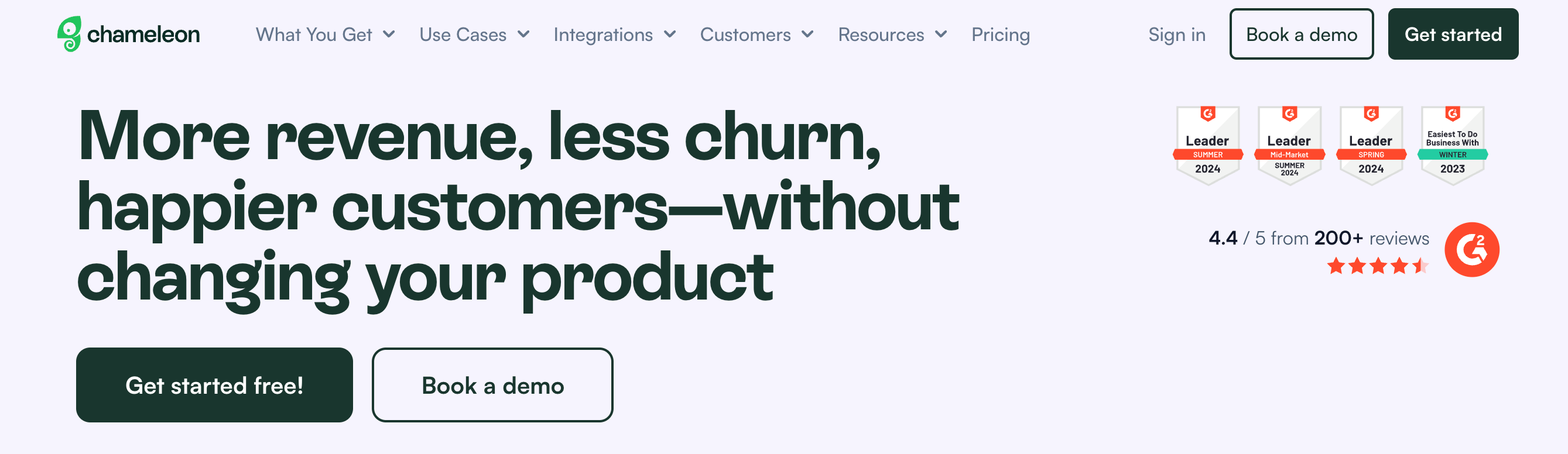
If Userflow feels limiting from a design point of view, Chameleon is often the next tool teams consider.
Chameleon gives you much more control over how onboarding looks and feels. You can fine-tune styling, layout, and interactions so tours and tooltips blend in with your product instead of sitting on top of it. This is especially important for products where onboarding needs to feel like part of the UI, not an overlay.
Chameleon also stands out because of its AI Copilot. Teams use it to quickly draft onboarding flows, test different versions of copy, and explore alternatives without starting from scratch. That makes experimentation faster and cheaper.
The downside is that Chameleon takes more time to learn and costs more than simpler tools. But for design-driven teams that care deeply about polish and are willing to invest the effort, it’s worth it.
3. Userpilot
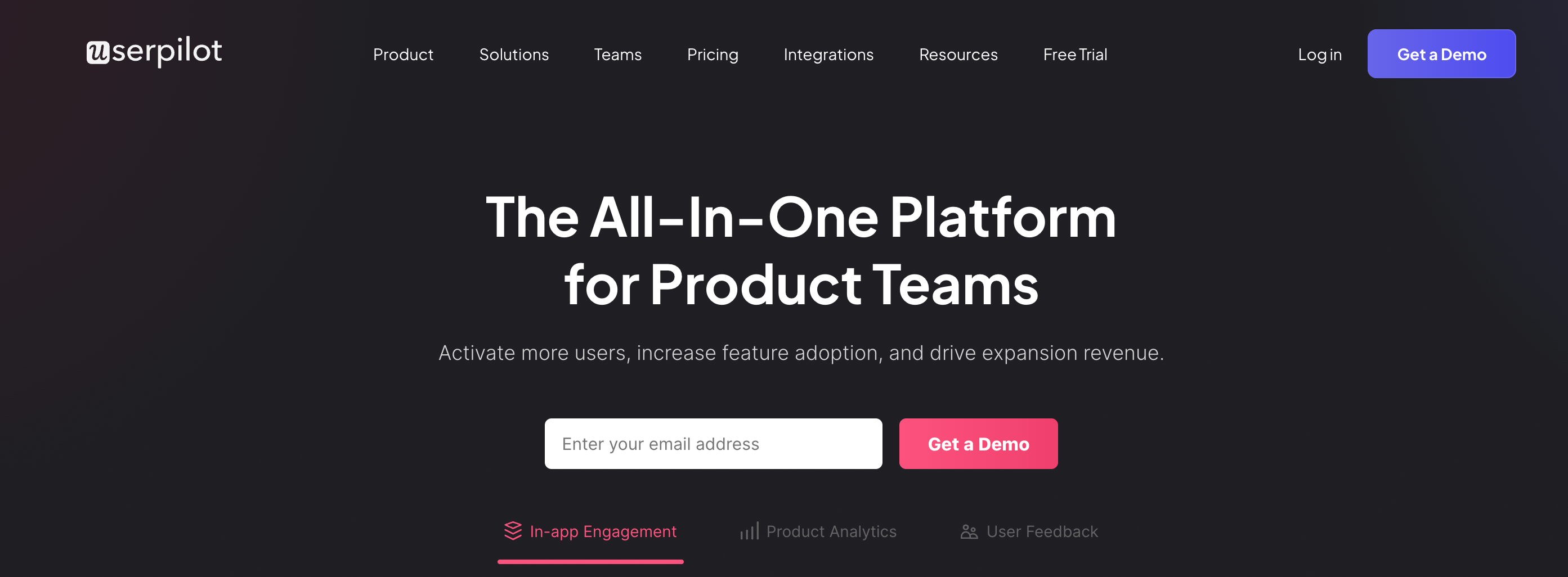
Userpilot looks at onboarding through a growth lens.
Instead of focusing first on how onboarding looks, Userpilot focuses on what users actually do. Onboarding flows are closely tied to event tracking, feature usage, and activation metrics, so you can see which steps help users move forward and which ones don’t.
Teams often switch from Userflow to Userpilot because they want clearer answers to practical questions. Which onboarding flows increase activation, where users drop off, and what kind of guidance actually reduces churn.
Userpilot gives you less visual freedom than some design-heavy tools, but for teams that care most about measurable impact, that tradeoff usually makes sense.
📚 Also read: 11+ Proven SaaS Growth Hacks for Rapidly Scaling Your SaaS
📚 Also read: Ultimate Guide to Product-Led Growth with 9+ Examples
4. Appcues

Appcues sits in a category of its own when mobile apps are involved.
While Userflow is mainly focused on web onboarding, Appcues supports both web and native mobile experiences. That matters for products where users switch between platforms and expect onboarding to feel consistent everywhere. Appcues has been around a long time, and that shows in how stable and reliable its mobile support is compared to many newer tools.
It’s also one of the more expensive options on the market, which makes it harder to justify for web-only products. But if mobile onboarding plays a central role in your product experience, Appcues often earns its price by doing that one thing especially well.
5. Pendo
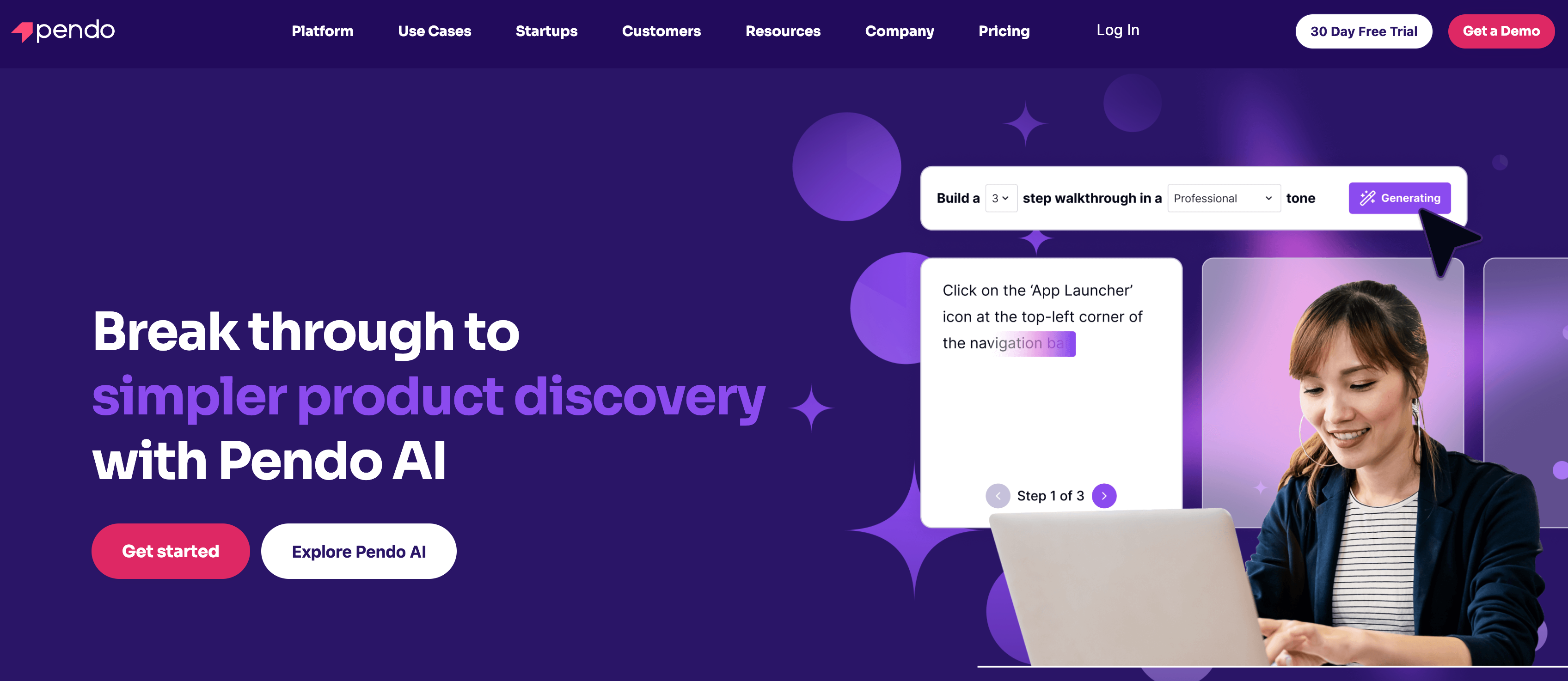
Pendo is best thought of as an analytics platform first, and an onboarding tool second.
Pendo’s main strength is helping teams understand how users behave at scale. Its onboarding features sit on top of detailed usage data, cohort analysis, and feature-level insights. This allows teams to base onboarding decisions on real behavior instead of assumptions, and to adjust guidance as usage patterns change.
For smaller teams, that depth can feel like more than they need. But for organizations that already rely heavily on data and dashboards to guide product decisions, Pendo can fundamentally change how onboarding and product strategy work together.
6. Whatfix
Whatfix is built for environments where onboarding goes far beyond one SaaS app. It’s commonly used to guide employees, partners, or customers through multiple internal systems, legacy software, and complex workflows. Because of that wide scope, setup takes time and pricing usually starts in the five-figure range.
What you get in return is consistency. Whatfix helps large organizations standardize how people use software, enforce best practices, and reduce the need for repeated training. It’s not meant for fast experiments or frequent UI tweaks, but for control and reliability at scale.
For startups, this level of depth is usually unnecessary. But for enterprises dealing with constant change across many tools, Whatfix can become a core piece of infrastructure rather than just an onboarding tool.
7. WalkMe
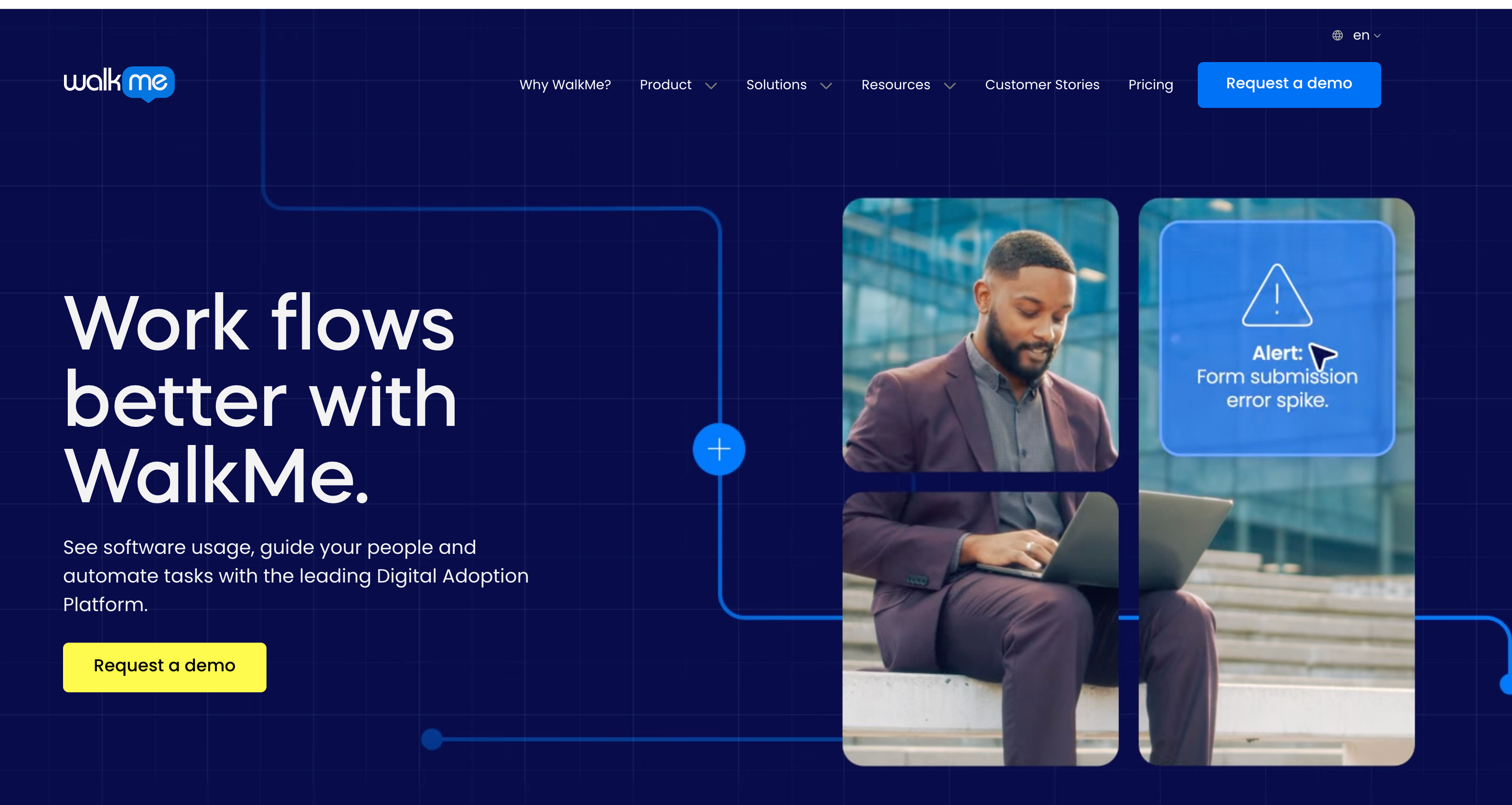
WalkMe approaches onboarding through the lens of change management.
WalkMe is commonly used in regulated or process-heavy environments where doing things the right way matters more than flexibility. It helps guide users through required workflows, supports large-scale software rollouts, and ensures people follow approved processes across the organization.
Compared to Whatfix, WalkMe is less focused on adding guidance across many tools and more focused on making sure users take the correct steps, in the correct order, every time. That makes it especially useful in industries like finance, healthcare, and large enterprise IT, where mistakes can be costly.
Like Whatfix, WalkMe is not really a good fit for early-stage companies. But for organizations where onboarding is closely tied to compliance and operational risk, it remains one of the most trusted options available.
How to Choose the Right Userflow Alternative in 2026
Most modern onboarding tools can handle tours, tooltips, and basic segmentation. So that doesn't really set any tool apart. What actually determines whether a tool works for you are the constraints you’re operating under. How fast your product changes, who maintains onboarding, and how much time you can realistically spend on it.
For most teams, the biggest constraint is speed. Onboarding quickly becomes a problem when it’s hard to update or risky to change. Teams stop touching it, and it quietly goes stale. This is where Hopscotch is the strongest choice. It’s quick to set up, easy to adjust, and forgiving when your product evolves. For teams shipping every week, that ease of iteration matters more than having every possible advanced feature.
Other tools start to make sense when your priorities are more specific. If onboarding is treated as an extension of your design system and visual precision is critical, a tool like Chameleon can be a better fit, at the cost of more setup and complexity. If your team is driven primarily by data and experimentation, platforms like Userpilot or Pendo are better suited, since they tie onboarding closely to analytics and outcomes.
But for the majority of SaaS teams, especially startups and scale-ups that want onboarding they can actually keep up to date, Hopscotch is usually the most practical and sustainable choice.
FAQ
Is Userflow Still Worth Using in 2026?
Yes. If you rely on complex branching logic and budget isn’t a concern. But many teams no longer need that level of complexity.
What’s the Closest Userflow Replacement in Terms of Features?
Hopscotch covers most core use cases at a much lower price. Chameleon offers more design flexibility.
Which Userflow Alternative Is Best for Startups?
Hopscotch. It’s faster to implement, easier to maintain, and far more affordable.
Which Tool Is Best If We Care About Analytics Most?
Userpilot for growth teams. Pendo for larger, analytics-heavy organizations.
📚 Also Read:
Convert more trials with Hopscotch
Simple and delightful onboarding tours your users will love.