9 Best Customer Engagement Platforms for SaaS in 2026

Most SaaS teams have a problem with using too many tools. They're running email sequences in one platform, managing support tickets in another, guiding users through onboarding in a third, and somehow trying to stitch the whole picture together in a spreadsheet. The result: customers fall through the cracks, teams waste time context-switching, and the budget bloats without a clear return.
The term "customer engagement platform" doesn't help. It's been stretched to cover everything from enterprise omnichannel marketing suites to simple shared inboxes to in-app tooltip builders. Vendors use it to describe wildly different products, which makes comparing them a headache.
In this article, we cut through the noise. We've broken down 9 of the most widely used customer engagement tools. What each one actually does well, who it's best for, and where it falls short. Whether you're a two-person startup trying to nail onboarding or a 50-person company building out a full customer success function, there's a tool on this list that fits.
What Is a Customer Engagement Platform?
In the broadest sense, a customer engagement platform is any tool that helps you communicate with users or guide them through an experience. But for SaaS companies, customer engagement generally comes down to three distinct things:
Communicating with users outside your product: The goal is to bring users back, nudge them toward activation, or deliver relevant information at the right moment in their journey.
Guiding users inside your product: Product tours, tooltips, modals, onboarding checklists, and feature announcements. The goal is to make sure users actually understand and adopt your product, not just sign up and disappear.
Managing conversations with users: Shared inboxes, ticketing, live chat, and customer health monitoring all live here.
Most platforms do one of these things well. A few claim to do all three. Understanding which job you most need to solve is the most important question before you start comparing feature lists.
How We Evaluated These Tools
Every platform on this list was evaluated against the same criteria:
Channel coverage: What touchpoints does it support, and how well?
Ease of setup: How long does it realistically take to get value from the tool?
Pricing transparency: Is the pricing model clear, and does it scale reasonably?
In-app vs. out-of-app capabilities: Does it work inside the product, outside, or both?
We tried to be direct about trade-offs. Every tool on this list is genuinely good at something, but not all of them are right for everyone.
The 9 Best Customer Engagement Platforms for SaaS in 2026
1. Customer.io
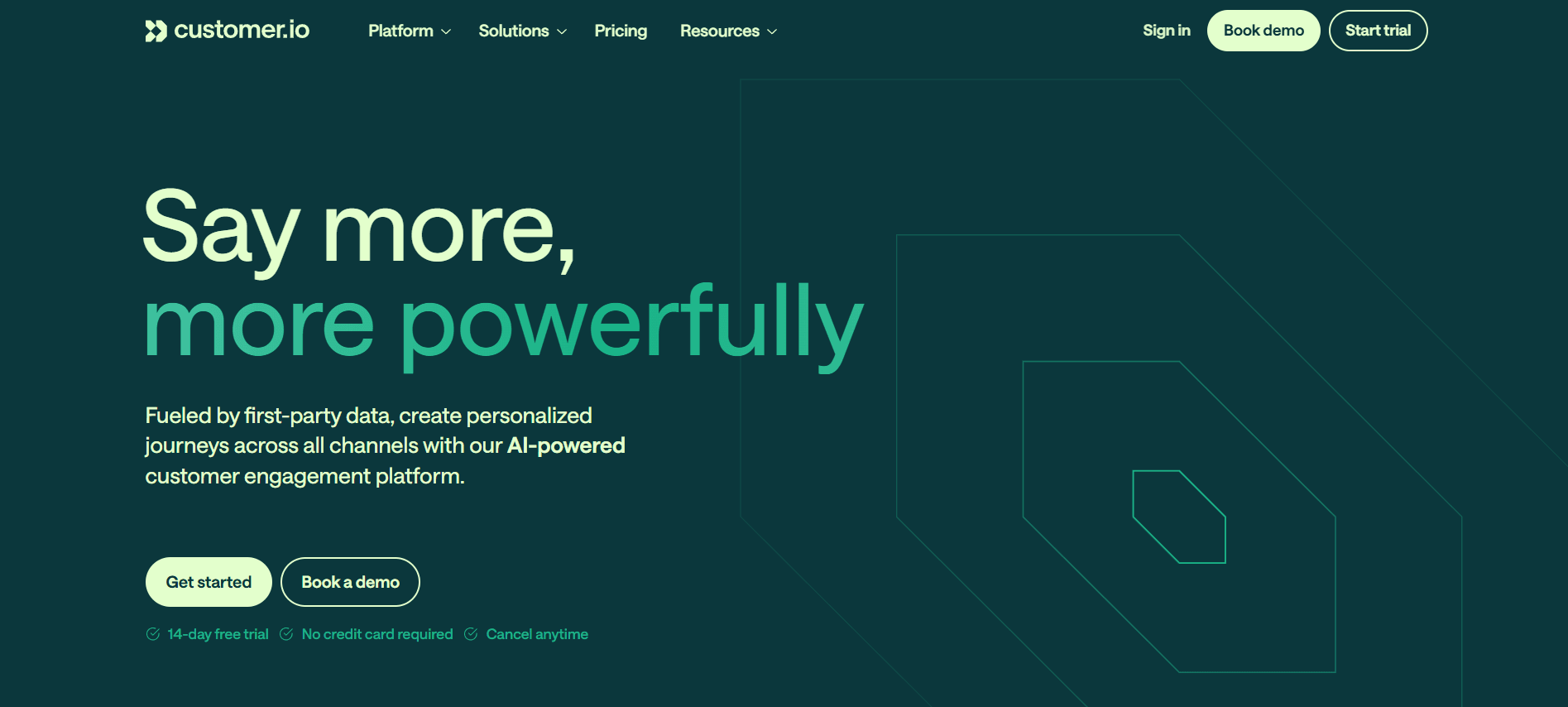
Best for: SaaS teams that want a powerful, data-driven messaging platform across every channel
Customer.io is one of the best customer engagement platforms in the SaaS world, and for good reason. It's built from the ground up around first-party data. Around the idea that every message you send should be driven by what a user has actually done (or not done) in your product. You connect your event data, define your audience segments, and build automated journeys that respond in real time to user behavior.
Fit for: Growth-stage and mid-market SaaS companies with dedicated marketing or lifecycle teams and a solid data foundation.
Pricing: Essentials from $100/month, Premium from $1,000/month (billed annually), Enterprise is custom pricing.
Watch out for: The jump from Essentials to Premium is steep. Teams that outgrow the entry tier quickly can find themselves paying significantly more than expected.
2. Braze
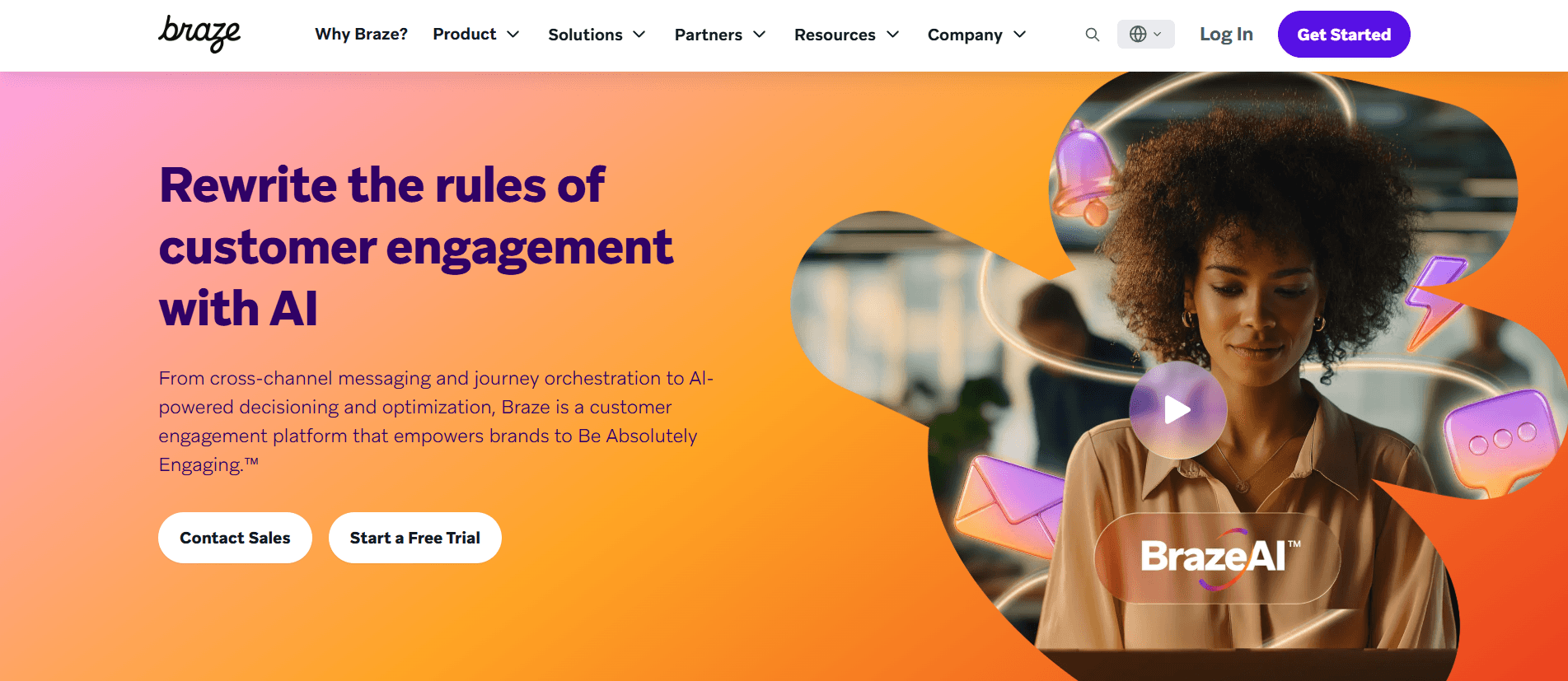
Best for: Marketing teams running large-scale, cross-channel campaigns, especially mobile-first
Braze is, at its core, an enterprise marketing platform. If Customer.io is built for developer-and-data-friendly SaaS teams, Braze is built for marketing teams at high-volume consumer and mobile-first businesses. The platform is best at orchestrating campaigns across email, push notifications, SMS, in-app messages, and paid media channels like Meta and Google, all from a single canvas.
Fit for: Marketing teams at high-growth or enterprise-stage companies with large user bases and a mobile-first product.
Pricing: Quote-based, no public pricing. Free trial available. Startup program offers 4 months free for eligible companies.
Watch out for: Data-point-based pricing can escalate quickly. Braze also has a serious learning curve.
📚 Also read: 11+ Proven SaaS Growth Hacks for Rapidly Scaling Your SaaS
📚 Also read: Ultimate Guide to Product-Led Growth with 9+ Examples
3. Intercom
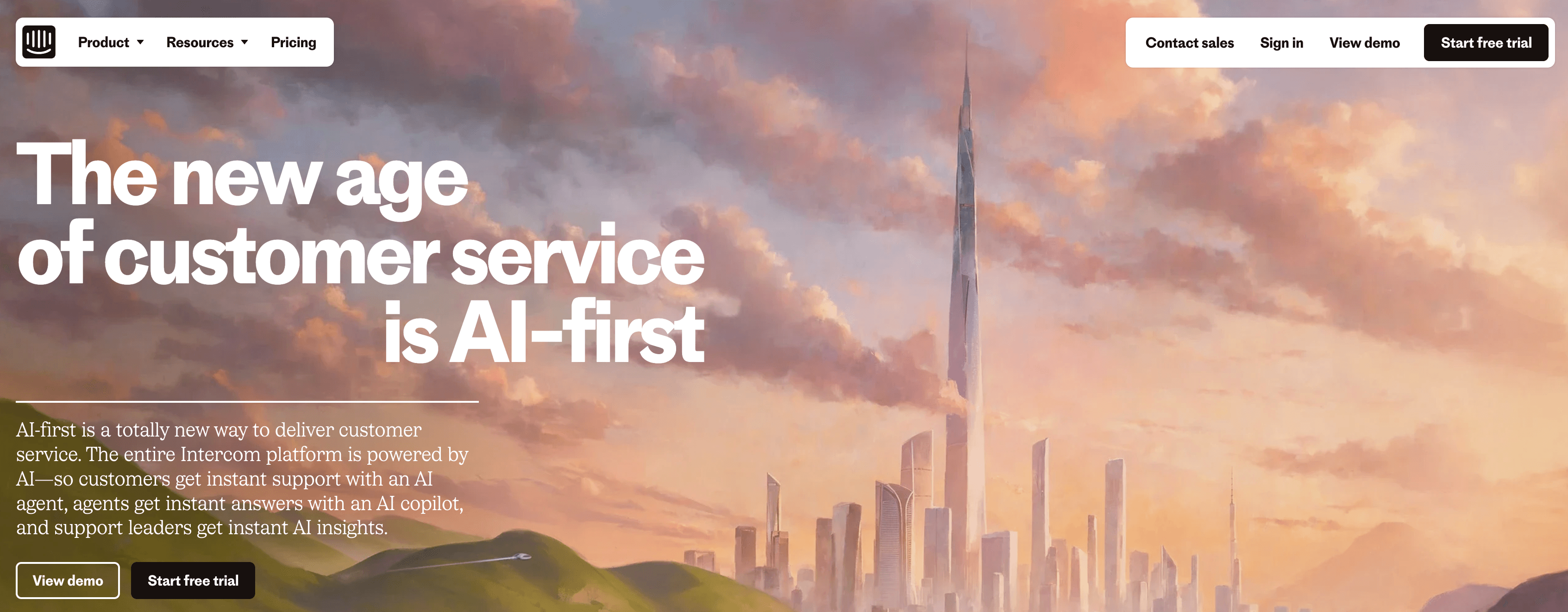
Best for: SaaS teams that want one platform to handle support, sales conversations, and marketing, and have the budget for it
Intercom has been one of the most influential platforms in the SaaS world for over a decade, and it continues to evolve. Today, it positions itself as an AI-first customer service platform, but that undersells it. Intercom can handle live chat, a shared inbox for support teams, proactive in-app messaging, email campaigns, outbound sales sequences, a knowledge base, and a product tours feature, all under one roof. For a certain kind of SaaS company, that consolidation is compelling.
Fit for: SaaS companies that want to consolidate support, success, and customer-facing messaging into a single platform and have the team and budget to use it comprehensively.
Pricing: Essential at $29/seat/month; Advanced at $85/seat/month; Expert at $132/seat/month. Fin AI Agent at $0.99/resolution.
Watch out for: Costs are multi-layered and can be hard to predict. Product tours and in-app guidance are included but notably less capable than dedicated alternatives.
4. Hopscotch
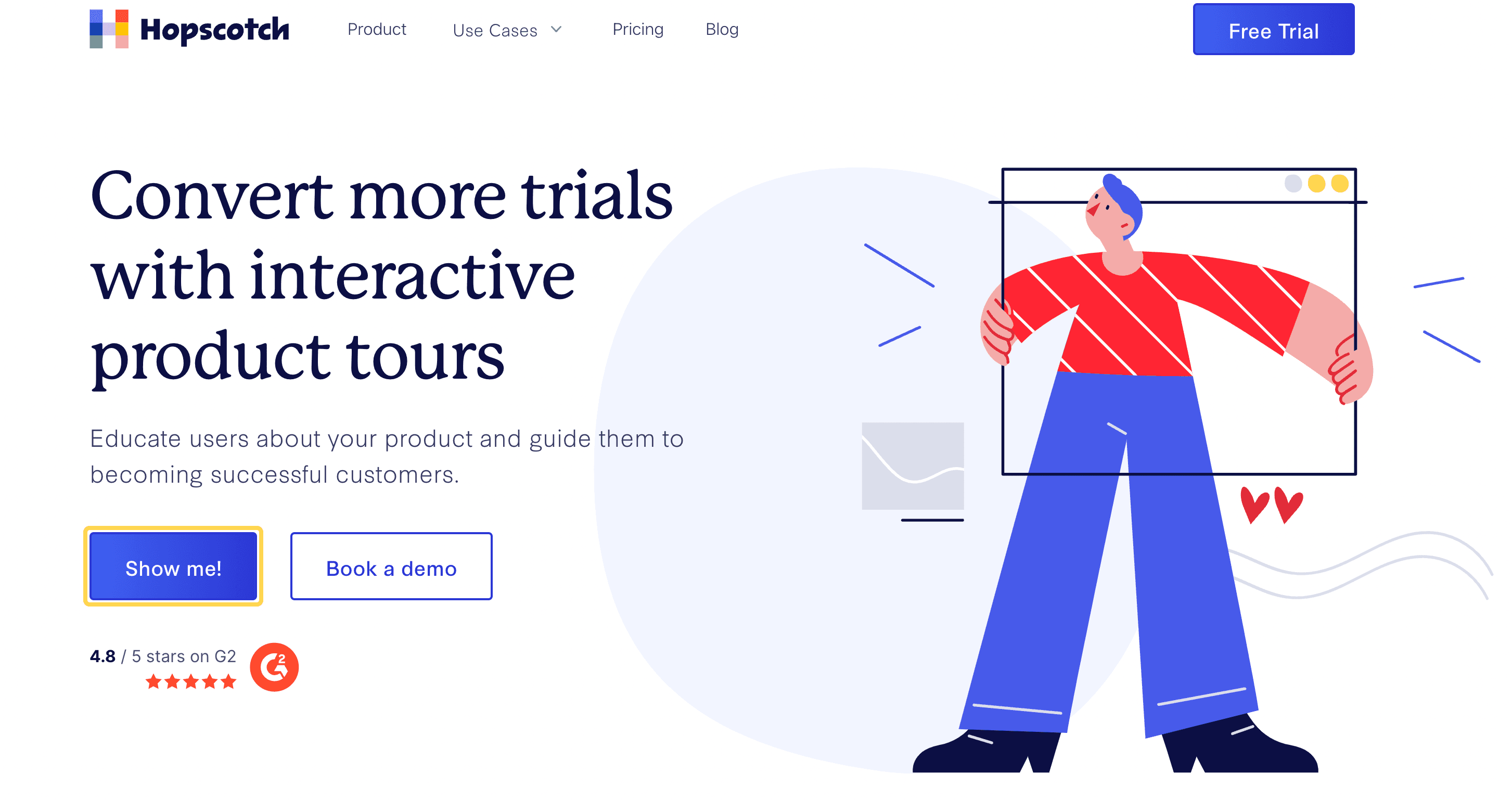
Best for: SaaS teams that want to nail in-app onboarding and user guidance without enterprise pricing or complexity
Hopscotch occupies a very specific and underserved niche. It's a focused, genuinely no-code in-app onboarding platform built specifically for SaaS companies that want to guide users to their "aha moment" without needing a dedicated implementation team, a developer on call, or a five-figure annual contract.
The core product covers everything you'd want for in-product engagement: interactive product tours, tooltips, modals, in-app messages, feature announcements, and onboarding campaigns, all built through a clean visual editor that product managers and customer success managers can use without engineering involvement.
Teams that have migrated from more complex tools like Pendo or Appcues consistently cite the speed of setup and the ease of iteration as the primary reasons they switched, and the G2 rating of 4.9 stars reflects that. Hopscotch is consistently one of the most compelling options available.
Fit for: SaaS startups and growth-stage companies whose primary engagement challenge is in-app: getting users to activate, adopt features, and understand the product.
Pricing: Starter at $99/month (up to 3,000 monthly users); Growth at $249/month (up to 10,000 monthly users); Enterprise pricing on request.
Watch out for: No email or out-of-app messaging capabilities.
5. ChurnZero
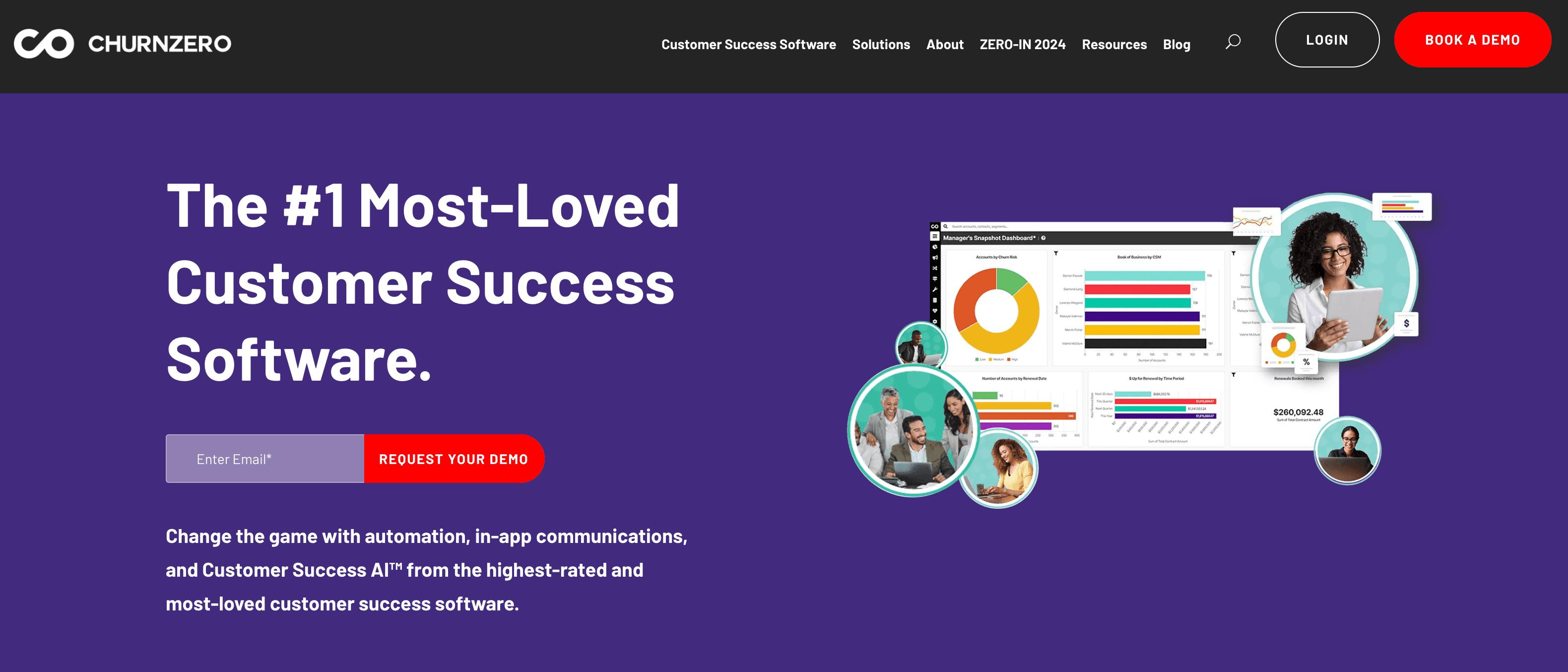
Best for: Customer success teams at mid-market and enterprise SaaS companies managing a defined book of business
ChurnZero sits in a different part of the customer engagement map than most tools on this list. Where platforms like Customer.io or Braze are designed for marketing-led, high-volume automated communication, ChurnZero is built for customer success managers who work closely with accounts, monitor relationship health, and intervene proactively when customers show signs of disengaging or churning. It's a customer success platform first, and that distinction matters.
Fit for: Mid-market and enterprise SaaS companies with a customer success team managing a defined book of accounts and a clear renewal and expansion motion.
Pricing: Custom pricing only. Publicly sourced estimates suggest annual contracts typically range from $30,000 to $40,000+.
Watch out for: Implementation complexity is real. ChurnZero is best when your data infrastructure is already solid and your CS workflows are defined enough to map into the platform.
6. Front
Best for: Support, success, and account management teams that want a collaborative, team-based inbox
Front is best described as a shared inbox built for teams, and it's a good one. The core idea is simple: instead of customer emails, chats, and messages landing in individual inboxes where they get lost or fall through the cracks, Front routes everything into a shared space where teams can assign conversations, collaborate with internal comments, co-draft responses, and track what's been handled. It has the familiarity of email, which keeps the learning curve low, but layered with the coordination and visibility that support and account management teams actually need.
Fit for: Support and account management teams that need team-based inbox management, clear conversation ownership, and multi-channel coverage without the rigidity of traditional helpdesk software.
Pricing: Starter at $25/seat/month; Professional at $65/seat/month; Enterprise at $105/seat/month. Several AI features are available as paid add-ons.
Watch out for: Feature gating means the full picture of what you need may sit across two or three plan tiers. The total cost with AI add-ons can surprise teams who budget from the base plan price.
7. Chameleon
Best for: Teams that need highly customized, complex in-app experiences and have the resources to build and maintain them
Chameleon is one of the most capable in-app experience platforms on the market. Product tours, tooltips, modals, surveys, launchers, and in-app help widgets are all supported, with a level of customization that few competitors match. For teams building nuanced, multi-step onboarding flows that need to adapt to user roles, plan types, or behavioral segments, Chameleon provides the flexibility to make it work. Its AI-assisted builder has also improved meaningfully, helping teams generate copy, suggest flows, and speed up initial setup.
Fit for: Product teams at growth-stage or enterprise SaaS companies that require highly customized onboarding experiences and have the technical resources to configure and maintain them.
Pricing: Chameleon does not publish pricing publicly. Plans are quote-based and typically structured at the mid-market to enterprise level.
Watch out for: The "no-code" claim is only partially accurate. Basic setups are accessible, but complex flows often require developer input.
8. Appcues
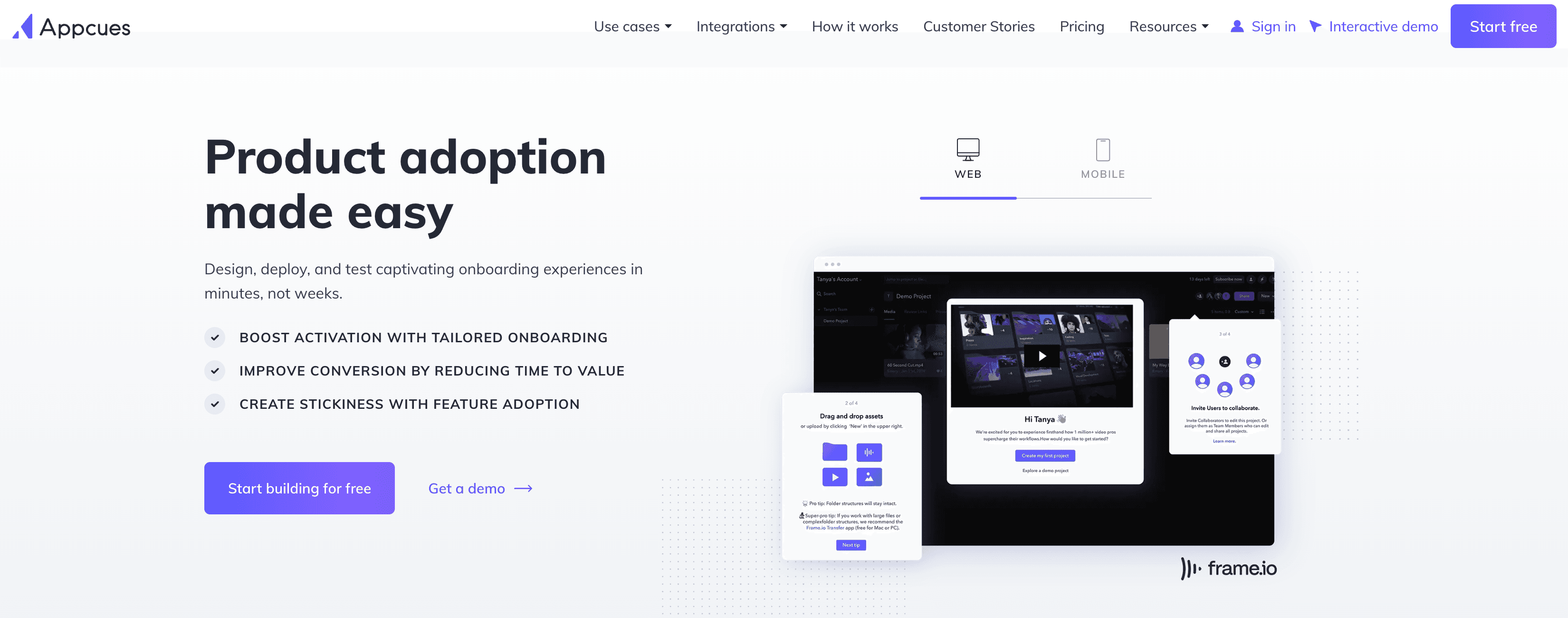
Best for: In-app onboarding and engagement for teams with both web and mobile products
Appcues has been one of the most established names in in-app onboarding for years, and its strongest differentiator remains its mobile support. Most in-app onboarding platforms are web-only. Appcues supports native mobile apps (iOS and Android) alongside web, which matters for SaaS teams whose users regularly switch between platforms and expect a consistent experience regardless of how they access the product.
Best for: SaaS teams with both a web app and a native mobile app that want consistent onboarding experiences across platforms.
Pricing: Quote-based, tiered by monthly active users. No public pricing. Typically positions in the mid-market range.
Watch out for: Pricing scales with MAUs, which can become costly as your user base grows.
9. Userflow
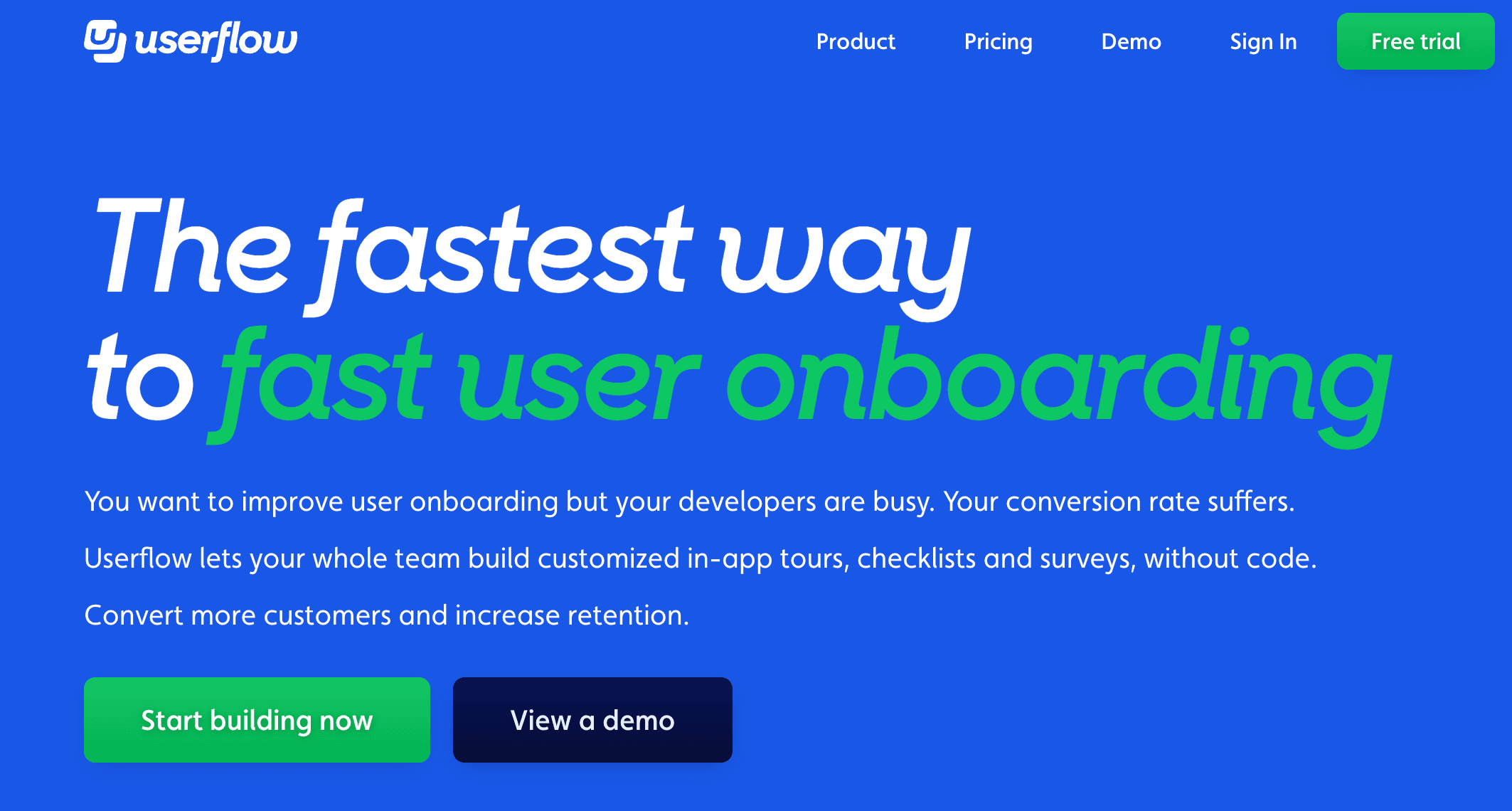
Best for: Product teams that need conditional, branching onboarding flows with deep logic
Userflow's defining strength is the depth of its flow logic. Where many onboarding tools support linear tours, Userflow is built for conditional experiences that branch and adapt based on user properties, past behavior, and in-flow actions. A user who selects "I'm a developer" in a welcome survey can be routed through a completely different onboarding path than one who selects "I'm in marketing." For products with meaningfully different user types, multiple configuration paths, or complex workflows, that flexibility can be important.
Fit for: Product teams with multi-role or multi-path products that need conditional, behavior-driven onboarding flows.
Pricing: Quote-based. Historically positioned at the higher end of the in-app onboarding category.
Watch out for: Product development velocity has slowed post-acquisition. Teams requiring cutting-edge feature releases may find the pace frustrating.
How to Choose the Right Customer Engagement Platform for Your SaaS
The hardest part of evaluating these tools is being honest about what your team actually needs right now, versus what sounds appealing in a demo.
Start with the job to be done. The most common mistake SaaS teams make is buying a platform that solves three problems when they actually only have one urgent problem. If your biggest challenge is that new users sign up and don't activate, an in-app onboarding tool is what you need, not a full-stack customer engagement suite with email workflows you won't set up for six months.
Think honestly about your team's capacity. Powerful platforms like Customer.io, Braze, or Intercom require dedicated owners. Someone needs to manage the data integrations, design the campaign logic, monitor performance, and iterate continuously. If your team is lean, you need a tool that can deliver value quickly without becoming a part-time job to maintain. This is where simpler, more focused tools earn their keep.
Consider the total cost. Many platforms on this list look affordable until you account for implementation costs, seat count, usage overages, and AI add-ons. Before signing anything, map out what you'd actually pay at your current user count, your expected count in 12 months, and with the features you'd genuinely use.
A focused, well-designed in-app onboarding platform that's genuinely easy to set up, quick to iterate on, and affordable to maintain often delivers more value per dollar than a sprawling platform that requires a roadmap just to get started. The tools that score highest on ease of use, speed to value, and pricing clarity in this category tend to be the ones teams actually use, and Hopscotch does well across the board.
Frequently Asked Questions
What's the Difference Between a Customer Engagement Platform and a CRM?
A CRM organizes your customer data and tracks pipeline stages. A customer engagement platform is the action layer that uses that data to communicate with customers, guide them through experiences, and trigger workflows based on behavior.
What's the Best Customer Engagement Tool For an Early-Stage SaaS Company?
For most early-stage teams, a focused, affordable in-app onboarding tool that's quick to set up and easy to iterate on without developer help will deliver the highest ROI. Hopscotch is a perfect example of that.
How Much Should I Expect to Pay For a Customer Engagement Platform?
Focused in-app tools like Hopscotch start around $99-$249/month, mid-range platforms like Customer.io Premium or Intercom Advanced run $1,000-$5,000/month, enterprise platforms like Braze or ChurnZero are typically $25,000+ annually.
Can I Use Multiple Customer Engagement Tools At the Same Time?
Yes, and most SaaS teams do. A common stack pairs an in-app onboarding tool with a lifecycle email platform and, eventually, a customer success platform, as long as they all integrate with your product analytics.
📚 Also Read:
Convert more trials with Hopscotch
Simple and delightful onboarding tours your users will love.