The 8 Best Pendo Alternatives for Startups in 2026

Pendo is one of the most capable platforms in the product experience space. It tracks how users behave, segments them by cohort, and lets you layer onboarding on top of real usage data. For large product teams, that combination is super powerful.
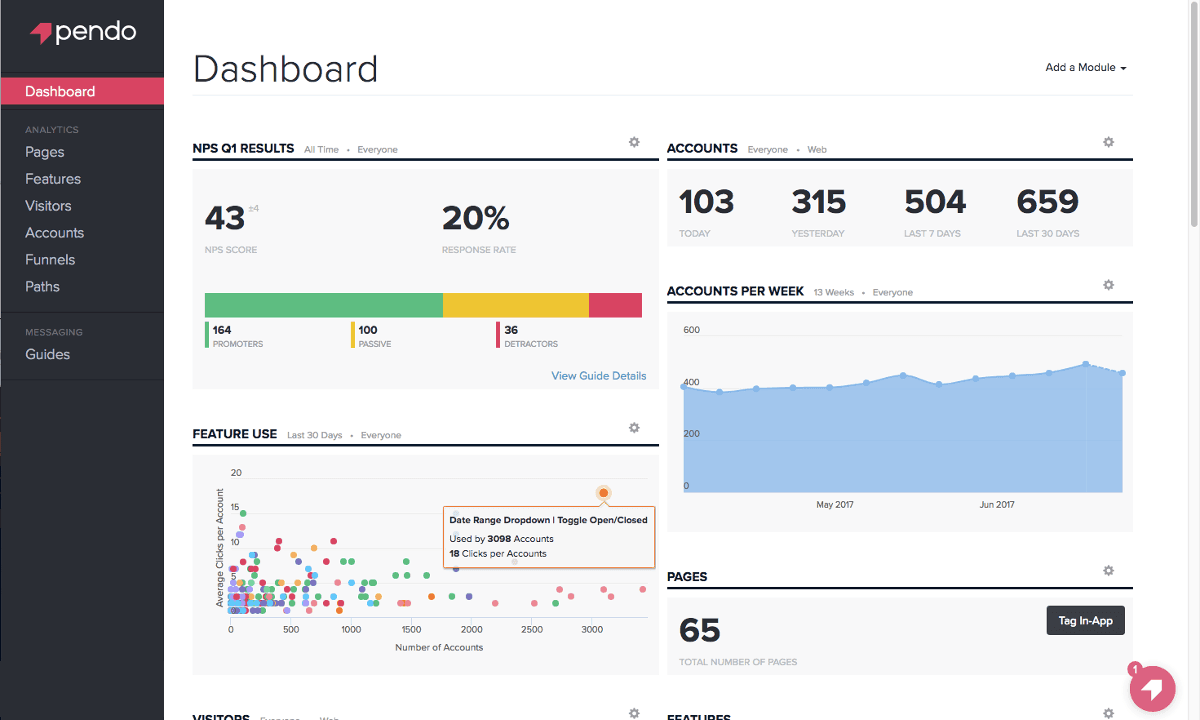
But most teams that need a tool like Pendo aren't large product teams. They're startups that need onboarding to work, and they've heard Pendo's name enough times to put it on the shortlist. When they dig deeper, they usually find the same thing. Pendo is an analytics platform that also does onboarding, not an onboarding tool that also has analytics. That difference is important.
If you came to Pendo for onboarding and found yourself paying for infrastructure you don't fully use, this article is for you.
Why Teams Steer Away From Pendo
Pendo's pricing and complexity are made for enterprise. Before you can show a single tooltip, you need to instrument your product. Tagging features, defining events, setting up dashboards. That's the design. Pendo's value compounds over time as you accumulate behavioral data. But for a startup that just needs users to get through onboarding, that upfront investment is hard to justify.
The onboarding features themselves also feel secondary. Guides, tooltips, and in-app messages exist in Pendo, but they're clearly built to sit on top of the analytics layer, not the other way around. Teams that care primarily about how onboarding looks and feels, or how quickly they can update it, tend to find the experience limiting.
And then there's cost. Pendo doesn't publish pricing, but it regularly comes in at the high end of the market. For a startup that's still figuring out what onboarding even needs to be, that's a difficult bet to make early.
When Pendo Still Makes Sense
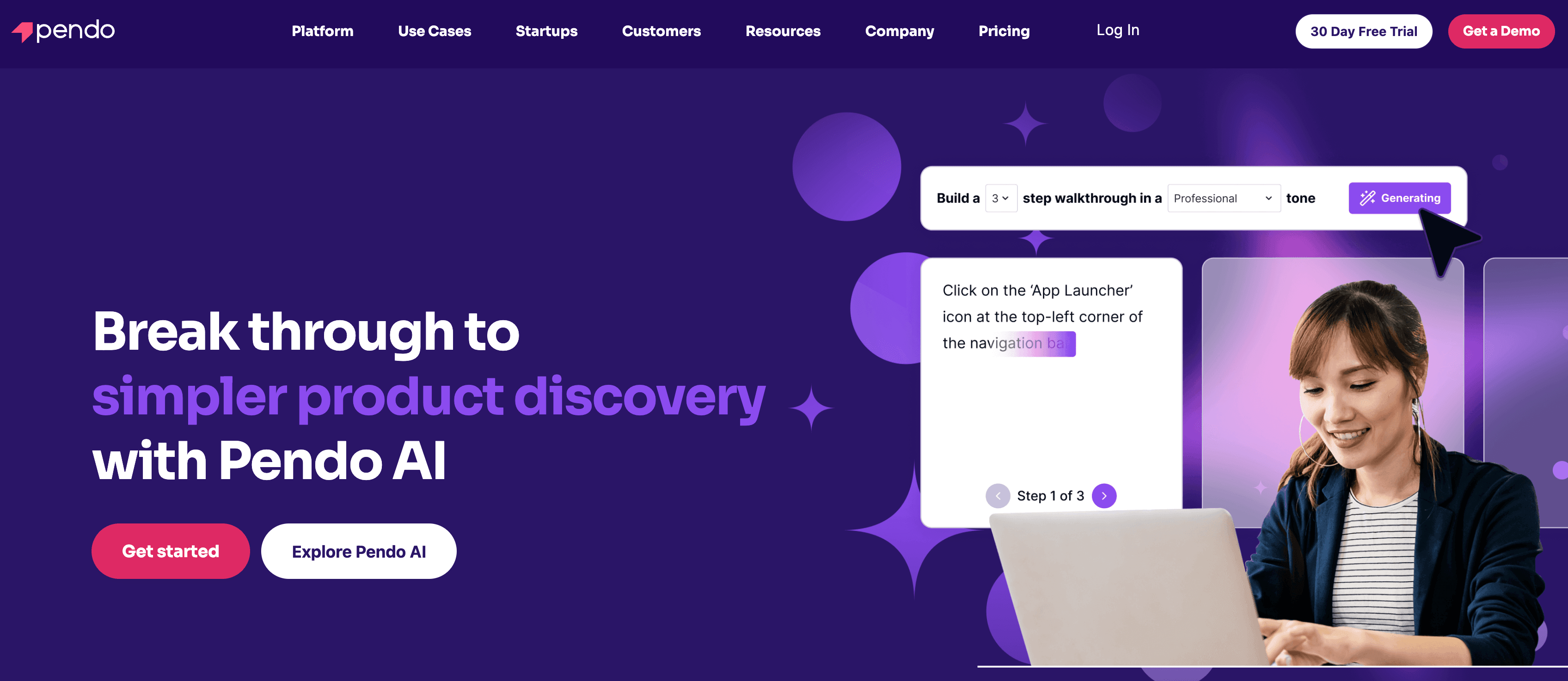
If your team already lives in data, Pendo is hard to replace. The integration between behavioral data and in-app guidance is tighter than almost anything else on the market at that scale.
For large organizations that need a single platform to track product usage and deliver onboarding across a complex product, Pendo earns its cost. The problems start when smaller teams try to fit into that model before they're ready for it.
8 Alternatives to Pendo for Startups
1. Hopscotch
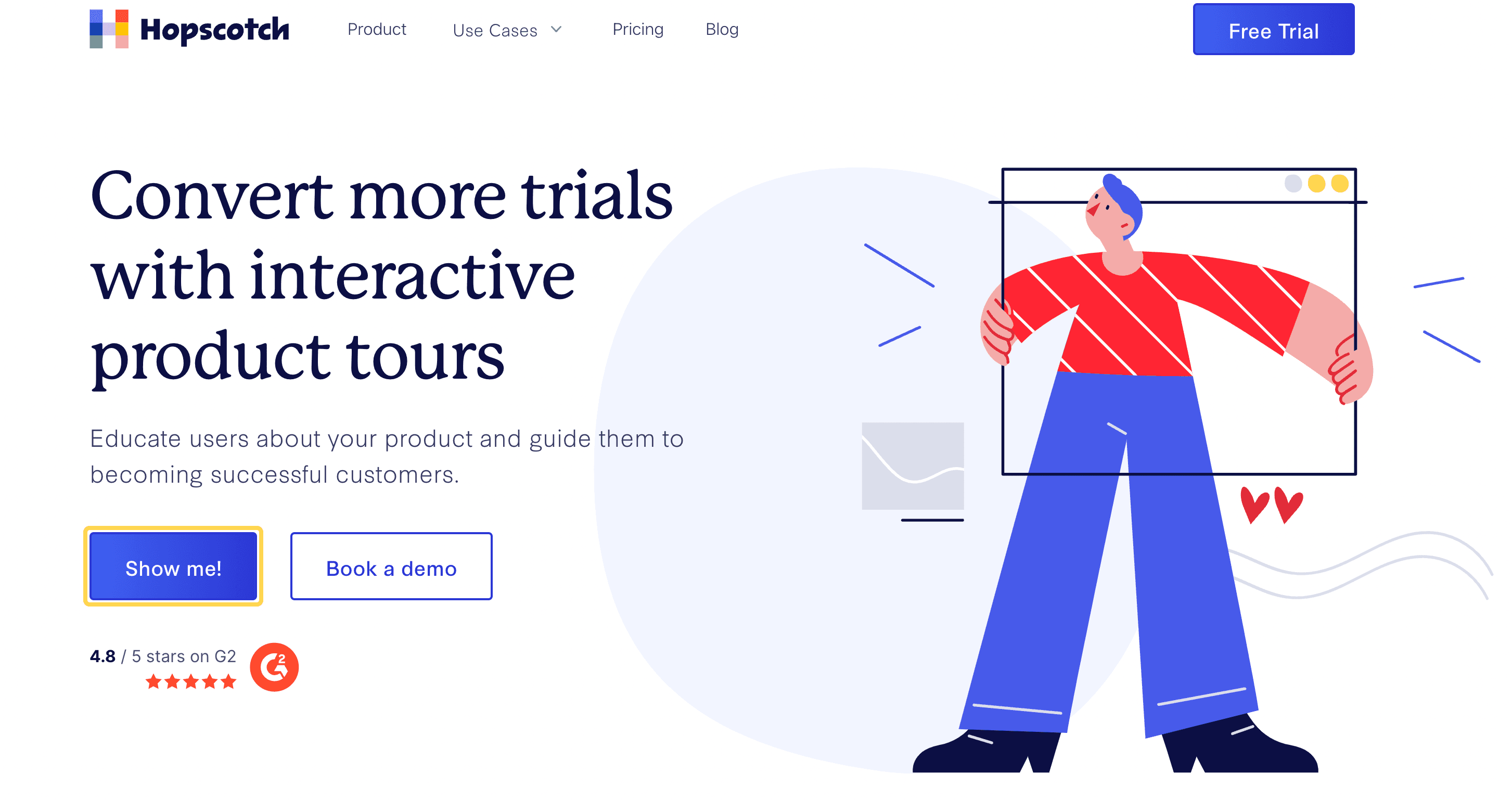
Hopscotch is built around one idea: onboarding should be fast to create, easy to update, and feel like a natural part of your product.
Where Pendo asks you to instrument everything before you can build anything, Hopscotch gets you moving in minutes. Product tours, tooltips, modals, in-app messages, all built without code, all editable without a developer. Segmentation is strong enough to show the right content to the right users without turning it into a data engineering project.
The pricing also reflects who it's built for. Starter plans begin at $99/month, which is a different conversation entirely from what Pendo typically costs.
What Hopscotch doesn't do is give you a Pendo-style analytics layer. You won't get deep cohort analysis or feature-level usage dashboards out of the box. But it integrates cleanly with the analytics tools you're probably already using, so you're not starting from zero.
For startups that want onboarding they can actually ship and keep current, Hopscotch is the most practical place to start.
2. Chameleon
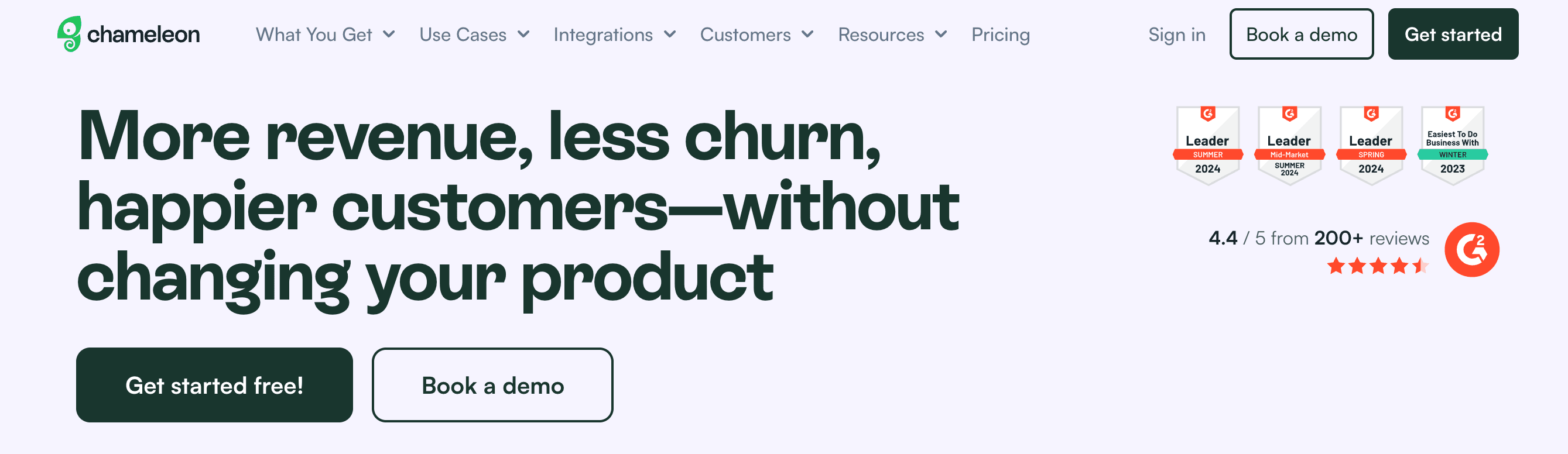
Chameleon is a tool to consider when design control is the priority.
Chameleon gives you fine-grained control over how every element looks and behaves. Tours and tooltips can be styled to match your product closely enough that users barely notice they're a separate system. For products where brand and UI consistency matter, that's a real difference.
Chameleon has also built out a solid AI Copilot that helps teams draft flows and test copy variations faster. That speeds up experimentation without requiring a lot of extra setup.
The tradeoff is that Chameleon takes time to learn and costs more than simpler tools. If you're switching from Pendo because of overhead, you'll want to make sure you're not trading one kind of complexity for another.
📚 Also read: 11+ Proven SaaS Growth Hacks for Rapidly Scaling Your SaaS
📚 Also read: Ultimate Guide to Product-Led Growth with 9+ Examples
3. Userflow
Userflow is the closest thing to Pendo if what you want is control over onboarding logic specifically.
Its branching system is one of the most capable on the market. You can build flows that adapt based on user attributes, past behavior, and UI state. The kind of conditional logic that matters when your product has multiple roles, configurations, or paths. Userflow doesn't try to be an analytics platform. It just does onboarding, and it does it with a lot of precision.
Since being acquired by Beamer, product development has slowed. It's still reliable, but it hasn't evolved as fast as the market around it. It's also priced at the higher end, which makes it harder to justify unless you're actually using the advanced logic features.
4. Appcues
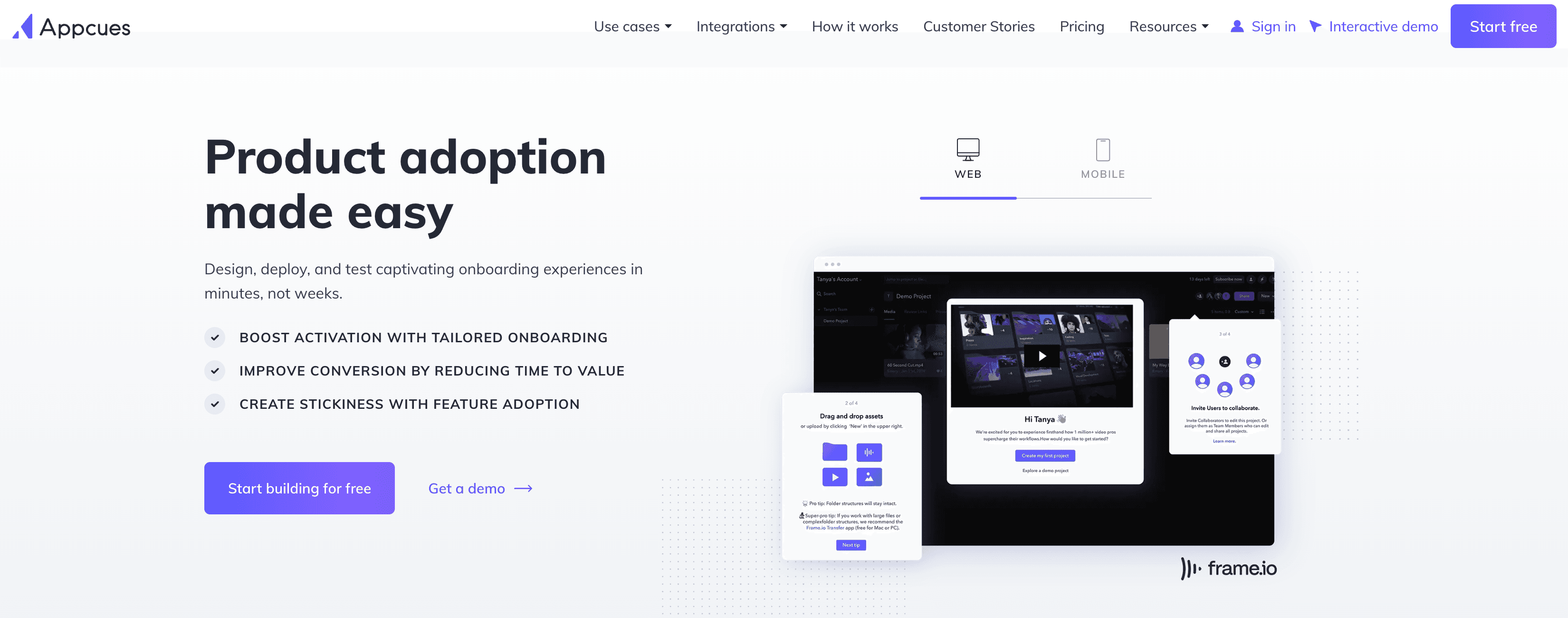
Appcues is worth considering specifically if mobile is part of your product experience.
Most onboarding tools are mainly web-focused. Appcues supports both web and native mobile, and its mobile implementation is stable and mature in a way that newer tools haven't caught up to yet. If your users move between a web app and a mobile app and you need onboarding to feel consistent across both, Appcues is one of the few tools that handles that well.
For web-only products, it's harder to justify. The pricing is high, and you'd be paying for mobile infrastructure you're not using.
5. Fullstory
Fullstory occupies a different position from most tools on this list. Fullstory Workforce combines internal product analytics with Workflow Intelligence, mapping how work actually moves across tools and exposing context switching, process deviations, and bottlenecks that product analytics alone can't surface.
Guides and Surveys covers the digital adoption layer Pendo is known for: in-app guidance, onboarding flows, and NPS collection. Deployment is a browser extension; retroactive session data is available with no engineering work after setup.
Fullstory's pricing is custom and enterprise-oriented. Teams on a startup budget will find the floor higher than most alternatives here.
6. Userpilot
Userpilot sits in interesting territory. It's also growth-oriented and data-connected, but it's built more explicitly around activation and onboarding outcomes than pure analytics.
You get event tracking, flow performance data, and segmentation tied to user behavior, enough to make onboarding decisions based on real usage, without the full instrumentation overhead that Pendo requires. Teams that want some of Pendo's data-driven approach but at a more approachable scale often end up here.
The visual design tools are less flexible than Chameleon, but for teams where the data matters more than the looks, that's an acceptable tradeoff.
7. Whatfix
Whatfix operates at a different scale than most tools on this list.
It's built for enterprises that need to standardize how people use software across multiple internal systems, including legacy tools. Setup is significant, and pricing typically starts in the five-figure range. In return, you get consistency and control across a complex software environment, something none of the lighter tools can realistically offer.
For startups, this level of infrastructure is almost never the right fit. But for large organizations dealing with onboarding across many tools and many teams, Whatfix can become core infrastructure rather than just an onboarding layer.
8. WalkMe
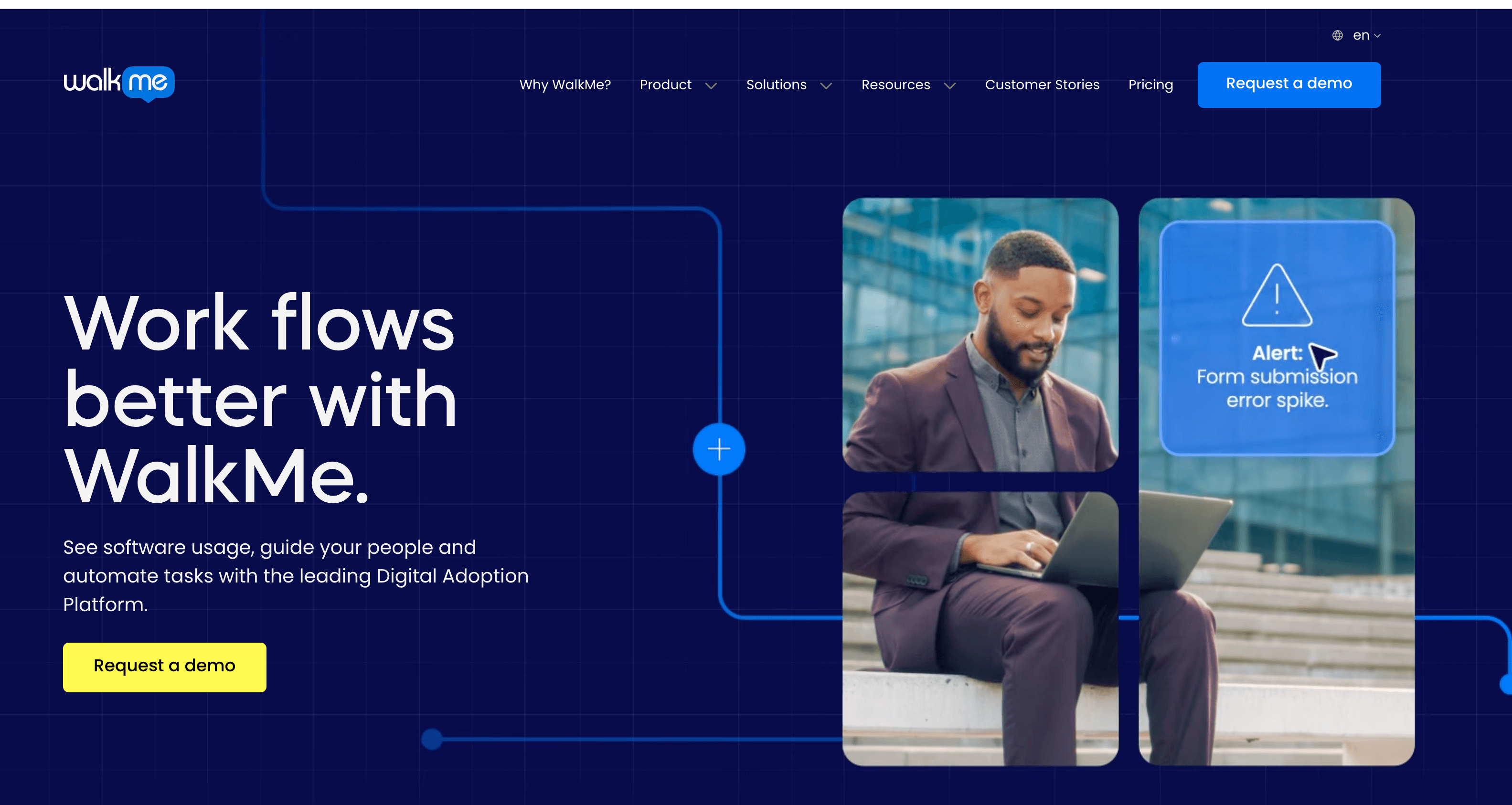
WalkMe comes at onboarding from a compliance and change management angle.
It's common in regulated industries, such as finance, healthcare, and enterprise IT, where users need to follow specific workflows in a specific order, and where deviation carries real risk. WalkMe enforces process more than it guides experience, which makes it the right tool in environments where that distinction matters.
Like Whatfix, it's not built for early-stage companies. But for organizations where onboarding is tied to regulatory requirements or operational risk, it's one of the most established options available.
How to Choose the Right Pendo Alternative
The question isn't really which tool has the most features. In 2026, most onboarding tools handle tours, tooltips, and basic segmentation competently. The real question is what you're optimizing for.
If you came to Pendo for the analytics and only secondarily care about onboarding UI, Userpilot gives you a lighter version of that model. If you came for deep enterprise control and have the budget for it, Pendo or WalkMe or Whatfix may still be the right answer.
But most teams reading this are in a different situation. They need onboarding that works, that they can update when the product changes, and that doesn't require a data engineering project to get started. For that use case, Hopscotch is by far the best answer. It's fast to set up, easy to maintain, integrates with the analytics stack you already have, and costs a fraction of what Pendo typically runs.
Onboarding works best when it moves at the same pace as your product. That's the standard you should be optimizing for.
FAQ
Is Pendo Still Worth Using in 2026?
For large product teams that need deep behavioral analytics alongside onboarding, yes. For startups that primarily need onboarding to work, it's usually more than you need and more than you want to pay for.
What's the Best Pendo Alternative for Startups?
Hopscotch. It covers the core onboarding use cases, integrates with your existing analytics tools, and is built for teams that need to move quickly.
Which Tool Is Closest to Pendo in Terms of Data and Analytics?
Userpilot for growth-focused teams. Pendo itself for organizations that need enterprise-grade behavioral analytics, there's no lightweight equivalent that does exactly the same thing.
What If We Need Both Onboarding and Strong Analytics?
Use Hopscotch for onboarding and connect it to Mixpanel, Heap, or Segment for analytics. That combination covers both needs without the overhead of a platform that's too big.
Which Tools Are a Bad Fit for Startups?
Whatfix and WalkMe are built for enterprise environments with complex, multi-system onboarding needs. Early-stage teams will find them overkill in both scope and price.
📚 Also Read:
Convert more trials with Hopscotch
Simple and delightful onboarding tours your users will love.